
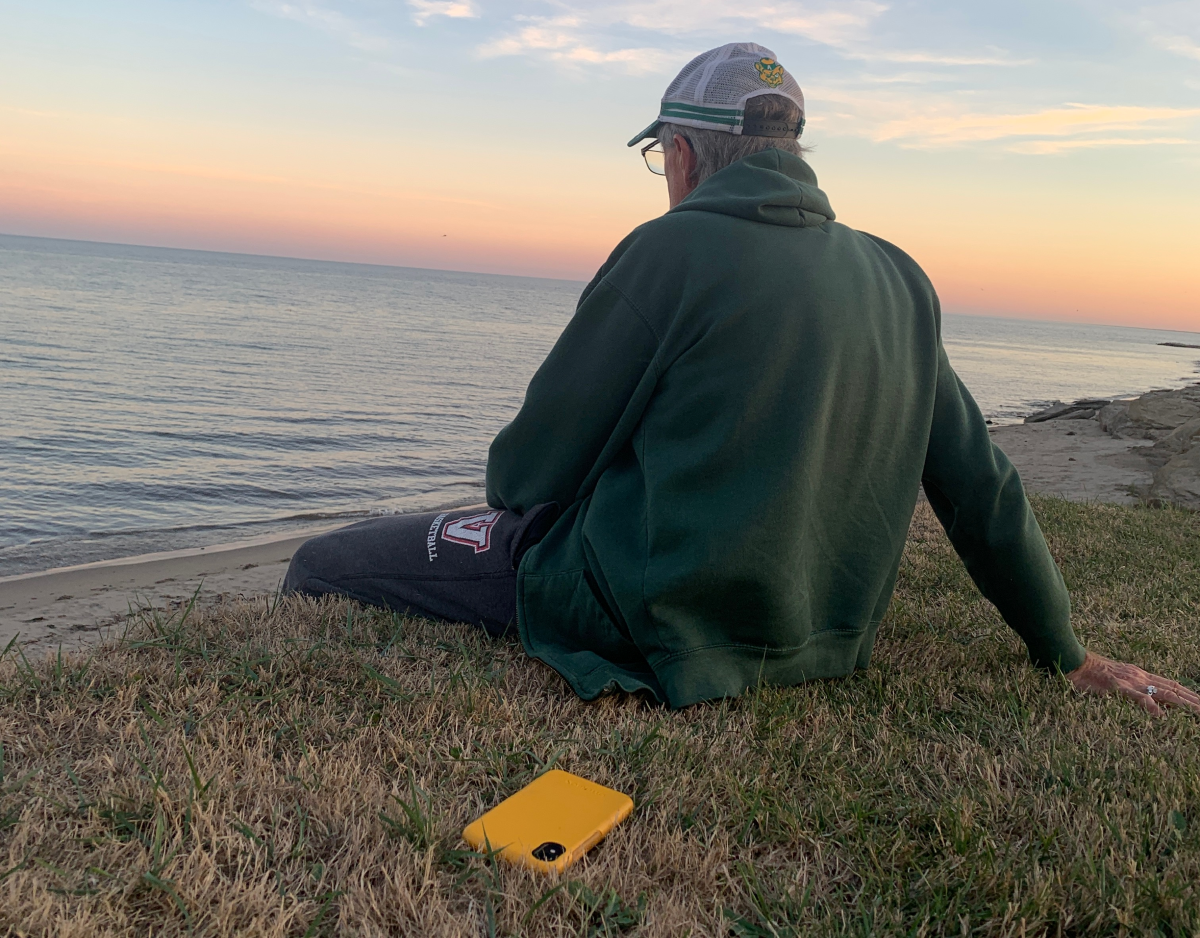
And how happiness can change as we age
Happiness as "enough"
I wish you enough sun to keep your attitude bright. I wish you enough rain to appreciate the sun more. I wish you enough happiness to keep your spirit alive. I wish you enough pain so that the smallest joys in life appear much bigger. I wish you enough gain to satisfy your wanting. I wish you enough loss to appreciate all that you possess. I wish enough “Hellos” to get you through the final “Good-bye.”
Original story by Bob Perks, in Chicken Soup for the Grieving Soul
“Happiness Reflected” – ‘Are you happy?’
This is the first question the hosts of the University of Alberta’s multi-year “Happiness Reflected” project always ask their guests at the beginning of their weekly podcasts.
Guests include U of A family members (students, faculty, staff, or alumni) whose poems, short essays, or photographs are included in that year’s International Day of Happiness (March 20) chapbook.
As an alumnus, I was fortunate enough to have one of my poems (“The junkyard”) included in the project’s first year.
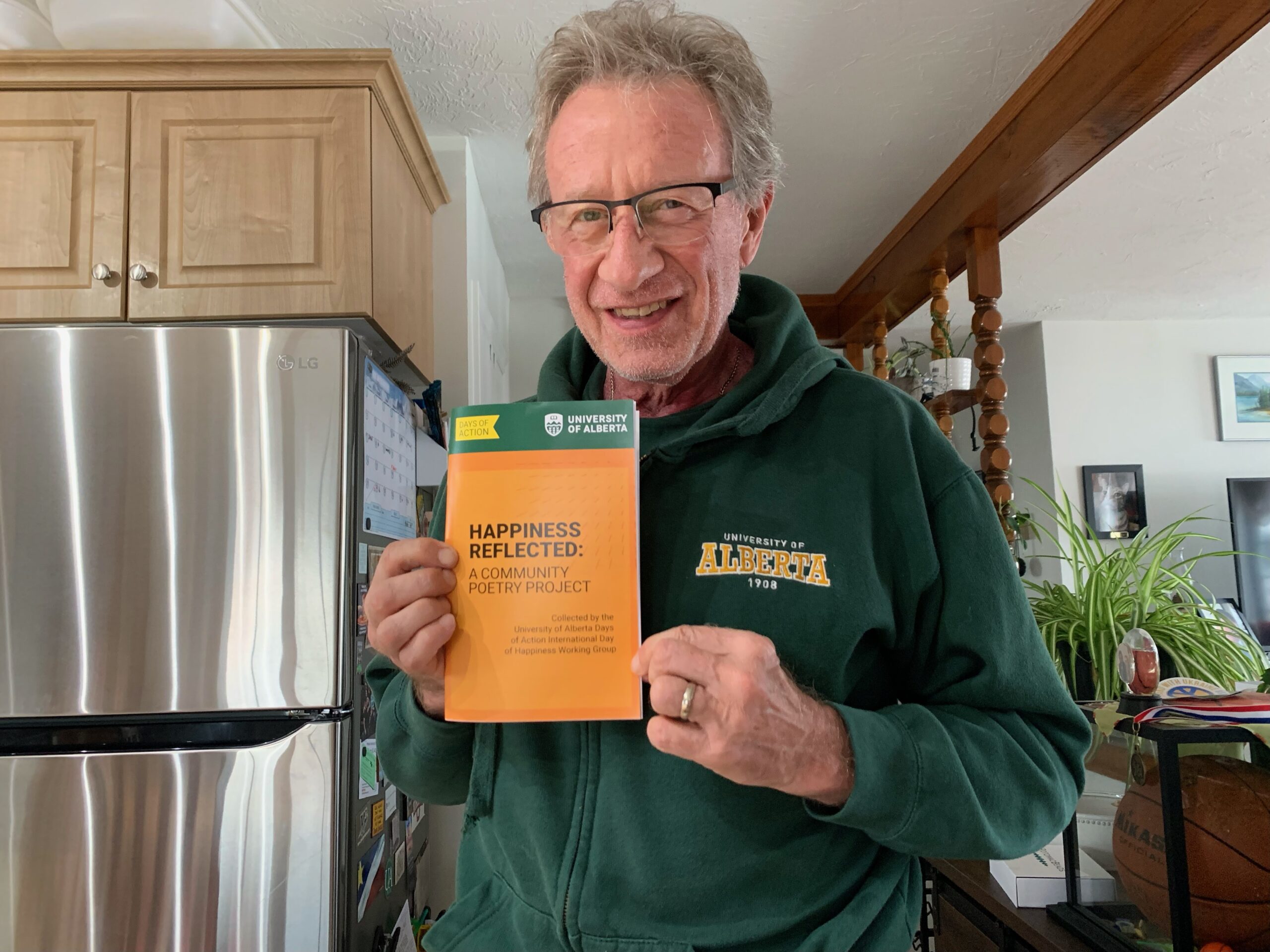
Most guests are students, and their responses to the question above are quite interesting, both because everyone interprets it differently and because the answers offer insight into the thinking of those born well into this century (as opposed to those of us who were born, you know, a while ago).
Many students take the question to mean, “Are you happy in this moment?” Positive responses include anything from “Yes! I’m graduating this year!” or “I’m meeting up with friends this weekend.” Negative responses run the gamut from “I’m in an internship that I don’t particularly enjoy” to “I’m away from my family, and I miss them.”
Positive or negative, these are all reasonable happiness responses from people who are of the age where what’s happening in the moment is indeed top of mind, especially since the question is so broad.
Not to say interviewees aren’t insightful, though. For instance, some students talk about how much joy the little things of everyday life bring them, and that such happiness is more sustained and consistent than the major dopamine hit of a singular positive event.
That particular answer leads to the next question.
Is this happiness or contentment?
Are they different and, if so, in what way?
Makes for some great conversation between my wife and me as we listen to these students talk about their lives on one of our occasional longer drives.
But I wonder how different their answers would be if the interviewer were to ask a series of more nuanced questions, such as:
“Are you happy with who you are?”
“Are you happy with what you’re doing and where you’re at in life?”
“Are you happy with your future prospects?”
The answers would be fascinating, I’m sure, likely as nuanced as the questions themselves. And they would undoubtedly engender a more incisive and revealing conversation than the very general “Are you happy?”
Doesn’t mean the interviewees’ answers aren’t interesting just as they are (as I said, they sure get my wife and me talking), only that the topic of happiness itself cries out for ever deeper examination.
In that vein, I got to wondering how someone my age would answer the same questions.
How does a longer stretch on this planet add to our understanding of what happiness is? Are we happier later in life than we are in life’s early stages? And how does my university happiness experience compare to those of the students in the podcasts?
Definitions of happiness and contentment
Before going there, though, the definitions of happiness and contentment that resonate with me (and we can find many, believe me) all include some variation of the following: Happiness emanates from an external source, while contentment is more about internal alignment, or “unconditional wholeness,” as one writer puts it. He continues:
Contentment comes from our relationship to what is going on around us rather than our reaction to it. It is the peaceful realization that we are whole and complete just as we are, despite the anger, sadness, joy, frustration, and excitement that may come in and out from time to time.
Daniel Cordaro, “What If You Pursued Contentment Rather Than Happiness?” in Mind and Body (May 2020)
In other words, happiness is superficial and fleeting, while contentment is a deeper feeling that comes from satisfying all the levels in our individual hierarchies of need.
Happiness in my “last quarter”
Now in my “last quarter,” I have many things that “make me happy” on an ongoing basis: the person I’m married to, the place I live, all my family relationships, my friends, my time being my own, having at least some financial options, several fulfilling interests, decent health, and public health care. I could probably list many more. Happiness indeed.
I also have many things that “make me unhappy” — that I don’t get to see my daughter and her husband in Ireland or our friends and family elsewhere as often as I’d like, the war in Ukraine, what the US Administration is doing to Ukraine (where I have family) and what it is trying to do to Canada in terms of trade and sovereignty, and some relatively minor health concerns.
And the damn cost of living, of course.
But those things that make me unhappy have absolutely no bearing on how fundamentally content I feel with my life and how grateful I am for the privilege of being so. And I recognize it’s a privilege.
I accept who I am and where I am in my life. I have a daily sense of purpose and fulfilment. My hierarchy of needs is met, more or less, and I feel whole in a way I didn’t when I was younger and in a way many people never do — spend 10 minutes on Reddit to discover just how sadly true this is.
So even when I’m suffering from some malady or another, crying my eyes out when we have to send a furry family member over the rainbow bridge, or seething with anger when Putin drops bombs on civilians, and Trump cozies up to Putin (which is often), I’m no less content with my lot.
What about happiness when I was back in university?
But would I have felt the same when I was in university? I wonder what my answer would have been if someone had asked me, “Are you happy?” And would I change my answer in retrospect?
Well, I had good marks (my lowest marks were in English — go figure), enjoyed all my classes, had lots of friends, a really great girlfriend for most of my university life, participated in some interesting activities outside of class, and thought I had some good learning and career options ahead of me (spoiler alert: I was mostly wrong about that last one).
I even had a steady summer job and a cool motorcycle. What would I not have been happy about? So I probably would have answered “Yes” to any superficial happiness question.

Looking back, though, I’m not sure I had sufficient self-awareness to determine my actual happiness. I was in the midst of navigating some difficult and even toxic relationships (including with my parents), I suffered from low self-esteem and craved approval, and I angered easily. Subconsciously, I don’t think I liked myself very much. Who knew?
I suppose I had many happy moments in my university years, but I was certainly not content with my lot, at least not as I define contentment above. That unease manifested itself to some extent while I was still in university, but I came to know how real it was during my first marriage (the details of which I will spare you). Definitely not content.
Happiness, yes, but contentment is the true basis of “enough”
Now, in my “last quarter,” I understand that discerning and achieving contentment are more likely (though not certain, my parents being a case in point) as we age, whereas happiness can be more transitory.
Hearing a university student say “I’m content” would be unusual because they don’t yet have the context that comes with age, and the very reason they’re in university is that they want to do and be something else. It’s inherently a transitional phase, and certainly not a negative one.
Interviewing those same students again in 40 years would be a fascinating exercise.
As for me, I loved university, but I’m glad that being a student is in my past.
I’m also glad I now understand that I was often happy in those days, but not content. Now I am content, if not always happy, because life can suck on occasion, even when it’s great.
Putting all that together, I have “enough.” More than enough, even.
And I couldn’t be more grateful, both for what I have now and all that led me to this moment.