The poetry room has space for every type of poem and person who writes poetry, whether they call themselves poets or not.
I like poetry – a lot
It’s always part of my ongoing book and podcast inventory. I love the peace that poetry instills in me at the end of the day, as I read and re-read a piece that resonates. I even keep an anthology of such poems that I return to from time to time.
I’ve also written a poem or two over the past six years since moving to the very shore of Canada’s east coast. But I would never call myself a poet.
I’ve had a couple of poems published, but I’ve submitted my work to so many contests and journals and have been rejected so many times that I decided to put poetry aside and leave it to those who have studied it for years. After all, they’ve earned the right to garner the attention, the accolades and, sometimes, the money. Clearly, I don’t belong, and should stop pretending that I do.
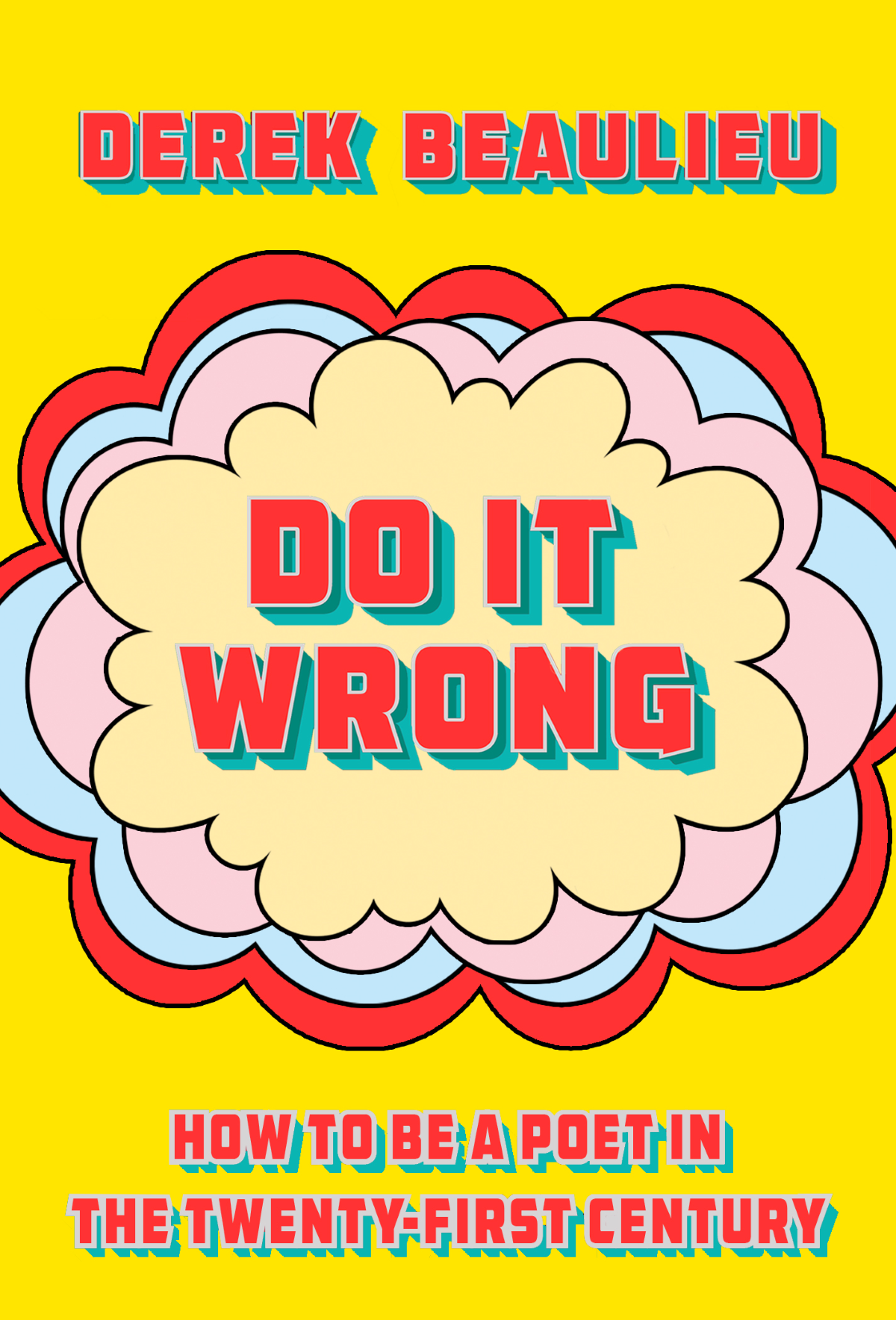
Derek Beaulieu, in his latest work, Do It Wrong, begs to differ.
Room for every type of Poet
Beaulieu is currently the Director of Literary Arts at the Banff Centre of Arts and Creativity. A recipient of the Queen Elizabeth II Platinum Jubilee Medal and a multi-award winner for teaching excellence, he was Poet Laureate of both Calgary (2014-16) and Banff (2022-24). In the course of his work, he has authored and edited over 26 collections of poetry, prose, and criticism.
In his mind, the poetry room is so capacious that it has space for every type of poem and person who writes poetry, whether they call themselves poets or not. Including the likes of me and other readers who doubt their capability.
It’s as if Beaulieu published this book at the exact time I needed someone to give me permission to take up the poetry-writing torch once again. As they say, the teacher appears when the student is ready.
The main premise of this book is simple: you’ll never make serious coin writing poetry anyway, so why try to fit your work into someone else’s preconceived idea of what “good” poetry should be? As he says, “Be brave. Be foolish, be strange and wonderful. You are free.”
Awards and competitions for poetry are overrated
Awards and competitions (based, as they are, on a capitalist worldview the author disdains) for poetry are the very antithesis of what creative writing should be: communitarian understanding and collaborative learning rather than competition (including with regard to grades in university writing programs).
Besides, it’s not like adjudicators choose award winners based on some absolute standard of quality:
Award winners are chosen by a jury of their peers, usually three to five writers from across subgenres, who are asked to agree upon which poem is the "best." Rarely is there a "best." There is only the work that most of the jury members could agree upon that day. The winning book is not necessarily "the best" or "the worthiest" or "the most exceptional." It is, in fact, only the book that people could compromise on over coffee.
As Beaulieu adds, “Awards don’t matter. Only the art does …. The search, the repeated attempt, the reach, the learning – this is the role of the poet.” Which is, of course, a bit ironic, given that he has himself achieved significant recognition for his work in both poetry and teaching.
Poetry as an anti-establishment tool
Despite that, the book is iconoclastic and anti-establishment at its very core: in its view on the importance of money and awards for poetry, in welcoming AI as a tool in the poet’s toolbox, and in the many ways a person can and should share their work. And the reader will certainly be surprised at some of Beaulieu’s innovative “publication” methods.
This iconoclasm is what makes the book not only useful to those like me who question their contribution to the canon of poetry, but also a damn fun (and relatively short) read.
I now have express permission to be weird, to write what I care about (and for myself), and to eschew awards and all other forms of external validation.
Like many others, I’m sure, I’m not quite ready to call myself a poet. But as a result of this book, I’m at least ready to re-start doing what poets do.
And to write book reviews like this one. After all, he dedicates a whole chapter encouraging writers of poetry to do that, too.