
But the Act is just one step toward full fairness and transparency
The Act is introduced in the Legislature
On May 27, Hon. Aaron Kennedy, the Minister for Local Government and Minister Responsible for Service New Brunswick, introduced the long-awaited Act Respecting Property Tax Reform in the New Brunswick Legislature.
Disclaimer: Because of my background in valuation and expertise on property assessment and taxation, I was invited to be part of a “stakeholder group” that occasionally advises the Government on property tax reform. However, the opinions are mine alone. I am also not affiliated with any political party.
Municipal accountability
I won’t bog you down with the Act’s legalese, but it amends several pieces of existing legislation in what I hope is only a first step in the comprehensive property tax reform the Holt Liberals promised in the 2024 election.
And I’m going to argue that these changes are an excellent way to begin what we should expect to be a multi-year reform process. These are my reasons.
Proper role of assessment
Another reason is that it relegates assessment to its proper role, namely as a way of determining who can afford to pay what, instead of as a back-channel municipal revenue tool. More valuable property? You should pay more tax. Less valuable property? You should pay less tax than the person with the more valuable one.
That’s all assessment is supposed to determine. An increased assessment should not automatically lead to an increased tax bill, yet that has been New Brunswick’s reality for the past 60 years.
Separation of assessment and taxation
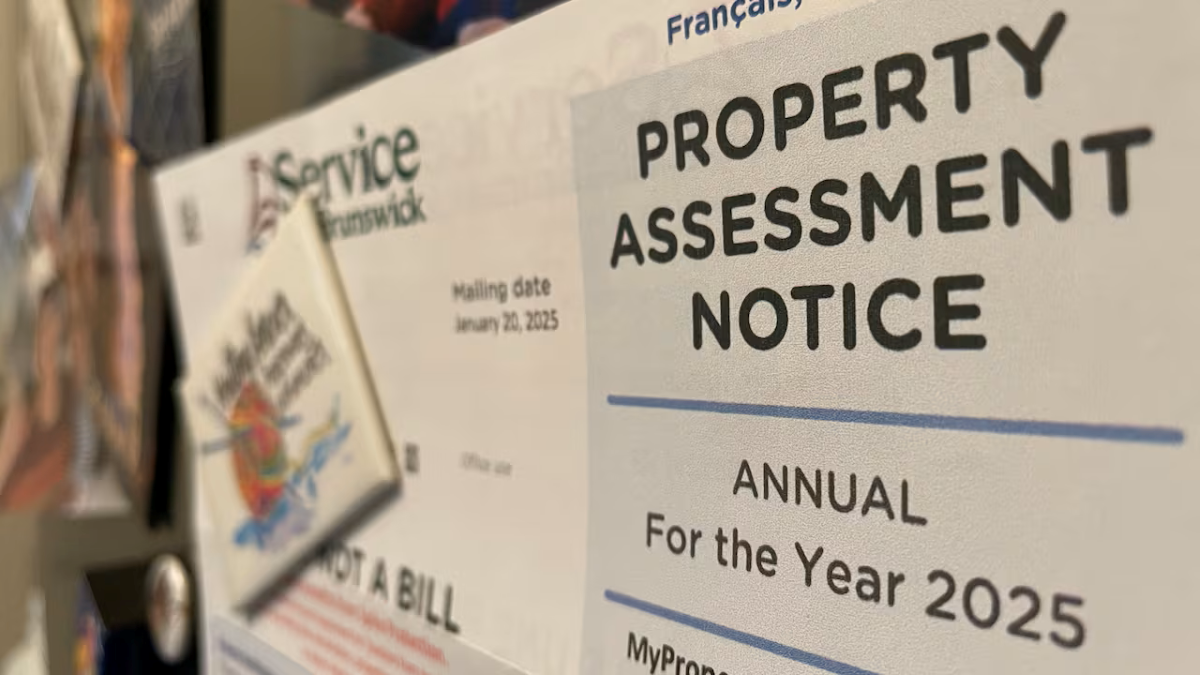
A third reason is that the proposed Act further separates assessment taxation. Our problem in New Brunswick is that we used to receive our assessment notice and tax bill on the same document, which made us think they were more related than they are (“incestuous” is the word that comes to mind).
We still talk about “appealing our taxes,” whereas we do no such thing – we appeal our assessments. Trained civil servants determine assessments based on market evidence, while politicians levy taxes.
But because the two have been intermingled for so long, we blame assessors for increased taxes, while letting politicians, who are the ones doing the spending, off the hook.
This is wrong on every level.
In the wake of the 2017 assessment debacle, the Government separated the assessment notice (issued by Service New Brunswick) from the tax bill (issued by Finance and Treasury Board), but they needed to go much further.
Which the Holt Liberals finally did on May 27.
It’ll take a whole generation for people to understand assessment and taxation as separate processes, as they are in most other jurisdictions in Canada, but the proposed Act is a start.
An Act(s) that has run its course: The tax-rate-driven system
For the last 60 years, New Brunswick has had what is called a “tax-rate-driven system,” in which the overall assessment value determines the amount of property tax a municipality collects. If assessments increase, so do taxes, provided the municipality maintains the same tax rate.
Essentially, a tax-rate-driven system means municipalities set budgets based on the expected tax-rate-driven revenue, rather than setting the tax rate based on budgetary needs, as it would in what’s called a revenue-neutral system.
Guess which system bleeds the taxpayer more.
This wasn’t a problem in the decades when property values didn’t move much in either direction, but it became a major problem when COVID hit, and property values (and therefore assessments) went through the roof.
Municipalities loved this (and the provincial government encouraged it) because they could always blame higher taxes on the increased assessments (and those nasty assessors, of course).
They could even lower the tax rate a penny or two at budget time and claim they were showing how “concerned” they were about “affordability,” while at the same time spending 10% more (or whatever) than in the previous year.
As a result, the media and taxpayers alike focussed on tax rates and assessments rather than on the budget and the politicians, where scrutiny actually belonged. The International Association of Assessing Officers says that a tax-rate-driven system “fails to meet the test of open and transparent property taxation.” No kidding.
The May 27 Act Respecting Property Tax Reform finally puts a stop to this nonsense.
The new Act: Revenue neutrality (via indexed revenue) at last
Starting in 2027, the Province will limit increases to an indexed amount. So if a municipality’s assessment base increases by 10%, for example, it must reduce its tax rate by the same percentage so that it gains no revenue from those increased assessments (excluding inflation, new construction, and some other exceptions).
If that same municipality needs/wants to spend more, this obviously means that it won’t be able to reduce the tax rate by 10%. However, it will have to show its taxpayer-citizens, right on the tax bill, exactly what the increased spending is for.
Beautiful. Now the tax rate will be based on the budget, rather than the other way around, where municipalities would always want to spend whatever they knew they had coming in. This is a victory for everyone in New Brunswick, property owner or not, because we can now hold the right people to account for public spending.
Quelle surprise – municipalities don’t like most of the new Act
Of course, the municipalities hate this because it’ll fundamentally change how they operate. The bottom line is that they will now be directly accountable to their own citizens for their spending decisions.
They can claim that they’re already transparent, accountable, and fiscally responsible all they want, but the evidence clearly says otherwise. After all, if someone promised you a windfall every year, wouldn’t you continually adjust your spending upward?
That party’s now over, and thank heavens it is.
Now, this doesn’t mean municipalities don’t require strong, stable, regular funding, especially for infrastructure. I know because I’ve been on municipal council. And it doesn’t mean they shouldn’t fight the Province tooth and nail to stop downloading ever more services onto municipalities. These are serious concerns.
But those are different conversations from the one about making them accountable for their revenue and spending decisions, and it’s precisely this that the Act addresses.
Is the proposed Act enough?
Does it address all the issues with what has been a very broken property tax system in New Brunswick?
Hardly.
And if the Government were to stop here with this one reform (note: the proposed Act includes more than just indexed increases, but that’s the most critical part), I’d be the first person to call them out on it. Harshly, even.
For instance, if they don’t eventually do away with the monumentally unfair Spike Protection Mechanism (SPM) as it’s currently structured, they may as well forget about the public ever buying into the system as being fairer.
The SPM, which uses an assessment tool to fix what is ultimately a tax problem, is one of the most visible deficiencies (as their own consultant’s report from the International Property Tax Institute clearly states), and the municipalities, the media, and the Opposition would be correct in holding the Government’s feet to the fire on that file.
In fact, I’ll be cheering for them.
But in the meantime, I’m willing to cut the Government some slack for wanting to implement reforms carefully and methodically so they know what works and what doesn’t. This is financially, practically, and politically prudent.
As I said, the May 27 Act Respecting Property Tax Reform is a great first step, but let’s hope that it’s just the first of several.
We still have a long way to go.
A slightly abridged version of this piece was first published in the Telegraph-Journal 2026-06-10
Other articles on assessment & taxation
(most recent article first)
Holt gets passing grade for property assessment freeze – for now
Residential vs. Non-residential tax rates: The forced link between the two is costing you money
Tax agents: Battling those big, bad assessors on behalf of the little guy?
Municipal budgets: About those ‘tax rate cuts”…
With no revenue neutrality, NB “fails to meet the test of open and transparent property taxation”
The ‘Spike Protection Mechanism (SPM) does property owners no big favour
Your Property Assessment Notice is here – now what?
New property assessment valuation date in 2025 – how does this affect you?
Property assessment and taxation reform: the Real Property Tax Act
Why “lowered tax rate” isn’t the right headline
Property assessment and taxation reform: the Assessment Act
Property assessment and taxation reform: backgrounder
Malign design: Nine ways to build a broken property tax system