Ukrainian-Canadian or Ukrainian in Canada?
Ukrainian activities sans fin
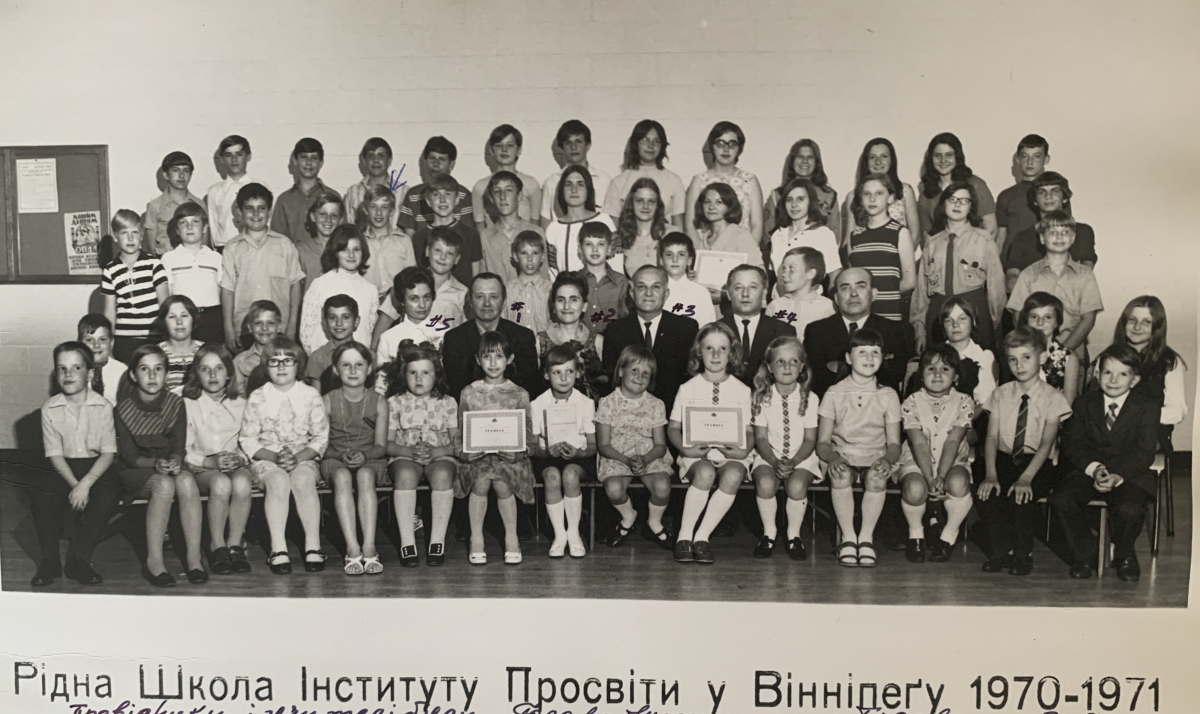
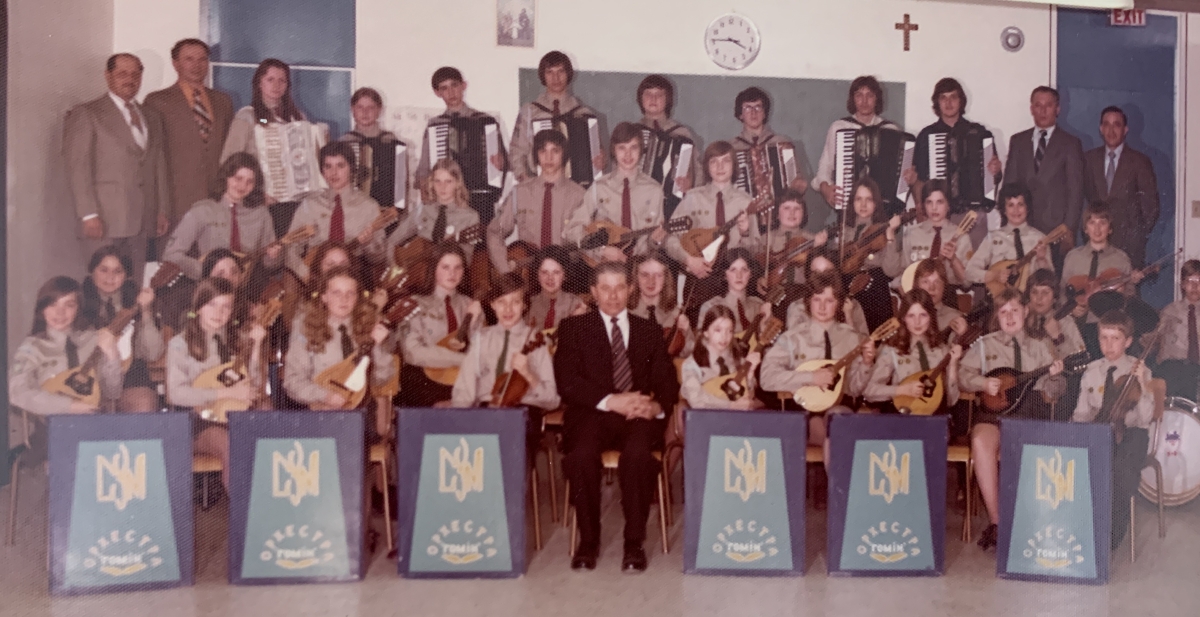
I had “Ukrainian school” — on Mondays and Thursdays after regular school. Ukrainian Youth Association Saturday afternoons, Ukrainian church Sunday mornings, and Ukrainian mandolin orchestra Sunday afternoons.
July meant a two-week stint at the Ukrainian Youth Association summer camp, too (oh, joy).
At various times, I also attended Ukrainian woodcutting classes and Ukrainian dance. The latter required above-average athleticism, which meant that I, non-physically gifted, would always be a bit player at best.
Thinking back, I wasn’t much of a wood carver either (intricate detail is not my thing). But my father required me to be at both.
This was my life from ages 8 to 15. I doubt kids in Ukraine did more Ukrainian things in any given week than I did. (Of course, the kids in the “Ukrainian SSR” in the ’70s and ’80s were busy being pushed into the Young Communist League and being taught how to kneel before almighty Mother Russia. Topic for another time.)
Ukrainian immigrants not alone
Although I’m no sociologist, I suspect Ukrainians weren’t the only diaspora doing everything they could to ensure that the second and third generations didn’t forget their roots. Completely understandable.
And Canada, with its official policy of multiculturalism, implemented under Prime Minister Pierre Trudeau in the late ‘60s, was the perfect place for any culture to thrive beyond its ancestral homeland. This was especially true for Canada’s “third wave” (post-WW2) of Ukrainian immigrants.
All that Ukrainian has come in handy...
That’s not to say that all my Ukrainian activity hasn’t come in handy in my adult life — far from it.
I can still read, write, and speak the language, however imperfectly. This has allowed me to be of some use to the Ukrainians who have come to Canada in the wake of Russia’s full-scale invasion of their homeland in February 2022, and blessed me with some good friends among them as well.
With my language skills, I can even stay in regular touch with my relatives in Ukraine. Good thing, that. Always nice to know when the Russians are dropping bombs on civilians in that part of Ukraine.
I can also still play the mandolin, which has often served as an eight-string key that opens doors to all sorts of performance and participation opportunities I didn’t even know existed. My repertoire has expanded beyond the Ukrainian songs of my youth, but I can still play them, too, when need be.
And I continue to have friends I met through those activities all those years ago.
So I’m grateful for what my Ukrainian background has given me and very proud of my heritage, especially in the wake of what the Russians are doing at this very moment.
...but there was just so much of it
I resented having so much “Ukrainian” pushed on me when I was young. All that activity kept me from participating in more “Canadian” things, such as hockey and football, which were, after all, what the non-Ukrainian kids I went to school with were doing.
I wanted and needed to fit in there, and I loved playing those games besides. Made the local six-man football team one year as a kicker (good position for a non-athlete), but my father, who had no use for sports anyway, put an end to that after only a single game.
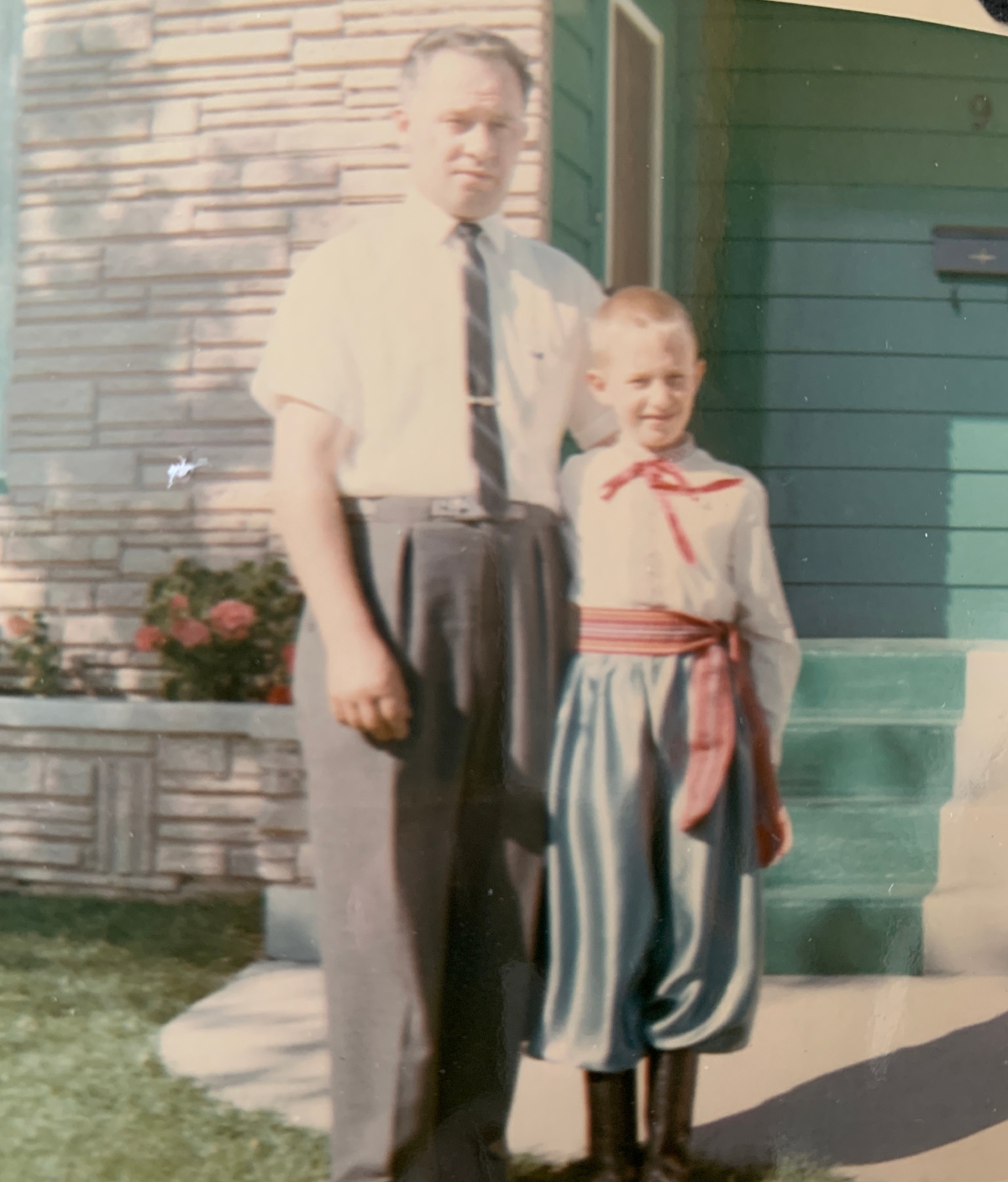
As I grew older, I came to understand and appreciate where my father — as a person uprooted from his home — was coming from. Certainly, he overdid it with my activities and made no effort to see the world through my eyes, but being Ukrainian was all he knew, so he acted accordingly.
If he couldn’t live freely in his own country, he was going to make sure that the spirit of his home lived here in Canada.
Sadly, though, I don’t recall him ever expressing appreciation or pride for his adopted country. In his mind, he was always an émigré, a displaced Ukrainian living na chuzhynshchyni — on foreign land. Made me wonder how he ever passed his Canadian citizenship test.
Talking to my friends over the years, I learned that not all his fellow immigrants felt the same way, but I certainly wasn’t the only kid who had more Ukrainian activities in a week than there were days in it. So he undoubtedly had company in his worldview.
His gravestone includes the line, “Nekhay nam chuzha zemlia bude lehka” — “May this foreign land be gentle on us.”
Some in my second-generation Ukrainian cohort embraced it all
Among my post-war cohort, some took to living very “Ukrainian” lives themselves over the years, including when they had their own children. Others like me, somewhat less so. In western Canada, where I was born, I have second-generation friends — particularly in the cities — who remain very active in Ukrainian organizations, groups, and churches.
The three Prairie Provinces (Manitoba, Saskatchewan, and Alberta) even offer bilingual Ukrainian schooling — and this isn’t after-hours “Ukrainian school.” This is bilingual schooling within mainstream education because parental interest has warranted it over the years.
Those in my second-generation cohort now had even more opportunity to live their lives in Ukrainian than their immigrant parents did, if they chose to do so.
The third generation: Ukrainian bilingual or French immersion?
Ukrainian bilingual education was limited to certain parts of the Prairies, primarily (though not exclusively) to larger cities such as Winnipeg and Edmonton. By the time we had a daughter, I was living in rural areas where that schooling option was simply not available. Even French immersion, which was gaining broad popularity by that time, had not yet reached those places.
If only one of Ukrainian bilingual or French immersion education had been available, no question we would have put our daughter in that program. Any second language is a good thing to have.
However, if both had been available and we’d had the choice between them, I’m not sure which we would have chosen. Would we have gone with the heritage language because I could speak it with her?
Or would we have chosen French, which would have given her more career and locational options in Canada, but which her mother and I would have had to learn ourselves to practice with her?
To this day, I still don’t know what our answer would have been. This isn’t to say that our third-generation Ukrainian daughter isn’t proud of her roots, but I never had the same agenda for her that my father had for me. And both she and we are OK with that.
Ukrainian immigration to New Brunswick after February 2022
The idea for this piece came from watching the post-invasion Ukrainians here in New Brunswick. In many ways, their evolution as a community mirrors what earlier waves of immigrants would have experienced upon arriving in Canada.
Ukrainians fleeing the 2022 invasion and settling in places like Edmonton and Winnipeg would be joining established communities with churches and organizations that have long been on the scene.
Different story here in New Brunswick, where the recent arrivals have had to start from scratch, as there were few Ukrainians here prior to 2022.
They’ve established a church, a branch of the worldwide scouting organization PLAST, Ukrainian dance groups, and a “Ukrainian school” for their children, who are the new “second generation.”
Sounds a lot like what my father and his cohort did when they arrived — if you can’t be at home, make your home where you are.
Perhaps one of those kids sitting in a “Ukrainian school” class on a wintry Saturday morning will write the same kind of story as mine one day, grumbling about having to be there but ultimately appreciating the reasons behind it.
I just hope that he or she has enough free time during the week to give it some thought.