
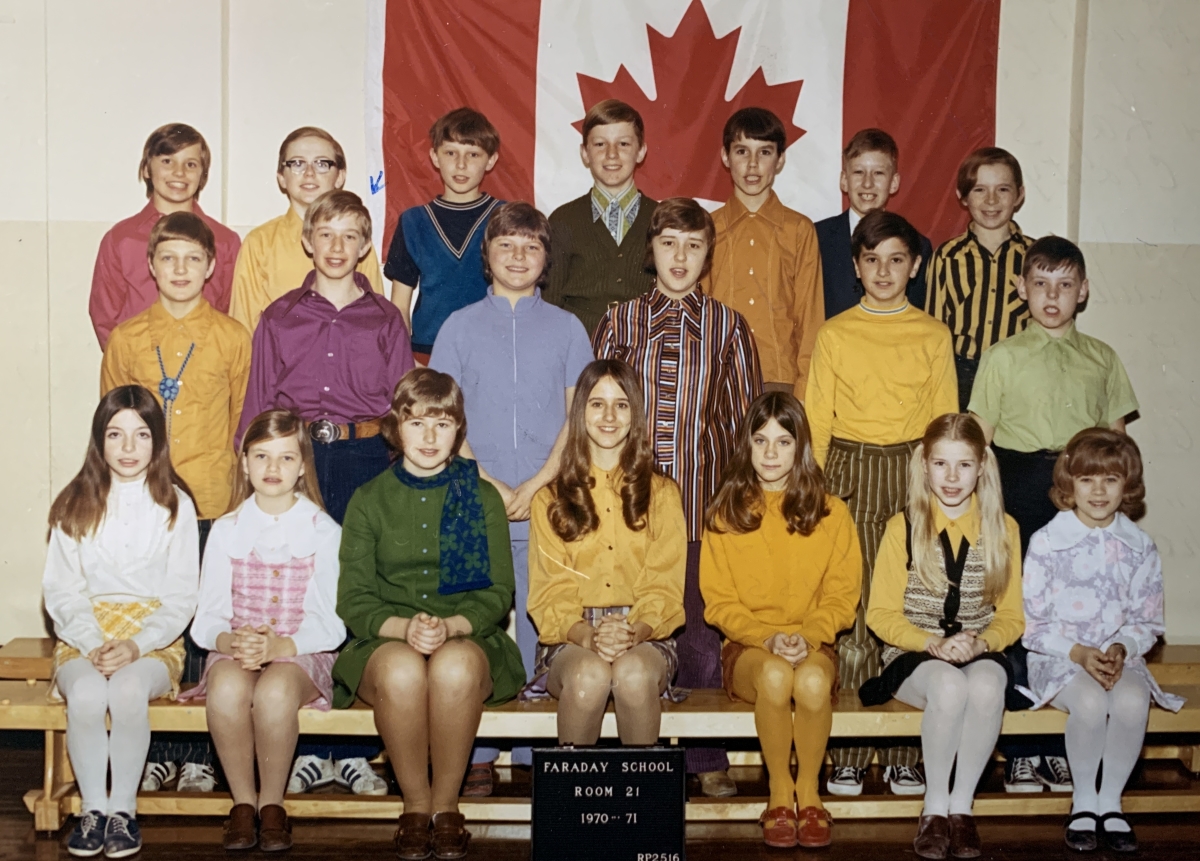
“Major Work” was the response when the Cold War called for educators to focus on “the brightest and the best”
Major Work: “Sputnik’s Children”
We were a cut above the rest, or so we were told.
Winnipeg’s “brightest and best.” And the program in which we were streamed had a name: Major Work.
Or, as one researcher called us many years later, “Sputnik’s Children.”
At a time when there was grave concern that the innovation gap between the supposedly superior Soviet Union and the West was growing, educators in both the US and Canada decided that education should turn (or return) to being more society-centred rather than child-centred.
Exclusivity rather than inclusivity was the focus, with academically advanced students placed among their intellectual peers for the betterment of all. As one researcher in Winnipeg said in the early 1960s (the program began there in 1954), the objective of Major Work was not only
“…to encourage the development of latent abilities in superior children, but also to prevent the loss of their potential contribution to society by allowing poor work habits and attitudes to develop in the non-stimulating atmosphere of a classroom where others are not of the same calibre.”
We had no idea that the fate of the free world rested on our shoulders.
The genesis of Major Work
“Major Work” and other programs like it actually began in the early 1920s in both Canada and the US, with the idea of training community leaders. At that time, however, the primary focus of education was still on what the average child needed to navigate his or her own life, rather than on what “gifted” children needed to learn to become those leaders.
This changed after World War II. Educators began to introduce programs, such as grade acceleration and enriched (meaning mostly additional) activities that supposedly met the needs of “gifted” children. At first, separate streams for such children were not favoured, but this later changed.
In Winnipeg specifically, it changed in 1954, when several children were accelerated and placed in separate Major Work classes. The program then took off and continued in the Manitoba capital until 1972, when it was nixed and inclusivity once again became the educational norm.
In other words, “streaming” had become a bad word in educational circles.
Enrolled in Major Work from 1968 to 1971 (Grades 4-6), I squeezed in just under the wire.
The Grade 3 IQ test
Apparently, they administered some sort of IQ test in Grade 3 as a way of determining who was to enter the “gifted” stream. I didn’t remember any such test until recently, when one of my Grade Three classmates who didn’t “make the cut” mentioned it to me on Facebook.
And, for whatever reason, I felt a bit sheepish hearing it at this age. But so it was back then, not just at the elementary school where I was, but all over Winnipeg.
What exactly was Major Work?
A different school
Firstly, it entailed attending a different school, centrally located in a much broader catchment area. At Faraday School, where I attended, my class included “gifted” students from at least 10 other schools (the school also included classes in the non-“gifted” stream).
None of my classmates lived within walking distance of Faraday School. Whereas I had walked about 750 metres to my K-3 school – uphill both ways, of course – I now had to take two buses, plus walk several blocks to get to the school doors (as helicopter parents everywhere gasp).
Same for everyone else (some even had to take three buses!), as there was no such thing as parents driving their kids to school in those days, regardless of weather or any other reason. Mom was at home, wishing she had the freedom of a driver’s license, and Dad was at work with the single household vehicle.
And bear in mind that this was Winnipeg, with its not infrequent -30 C winter days.
An “enriched” Major Work curriculum
As for the classes themselves, we took all the typical subjects that students our age would take, including math, science, art, music, and social studies. But there were additional opportunities built into and around those, whether we always appreciated them at the time or not.
These included field trips (especially in Grade 4), public speaking, typing – who knew how handy that would come in? – and violin lessons based on the Suzuki Method (learning to play by ear before learning how to read music).
Many of us didn’t much care for the violin instruction, at least partly because it meant hauling yet one more thing home by bus, a burden that already included a lunch kit and a briefcase. It also meant occasional recitals on Saturdays, which didn’t thrill anyone either.
(And now here I am at 66, still playing my mandolin by ear – mandolins are strung the same as violins – which has come in real handy when joining jam sessions over the years. Thanks, Mr. Suzuki!)
A Major Work staple: “Reading Club”
But perhaps the most impactful of all of our “enriched” learning was Reading Club – a staple of Major Work programs throughout North America. This is where we learned about aspects of literature itself, such as drawing inferences and conclusions, understanding literary techniques like metaphors and similes, and recognizing different figures of speech and styles.
More importantly, we students would take turns chairing the chapter discussion sessions ourselves, so we learned how to conduct group discussions and interact with each other respectfully and productively.
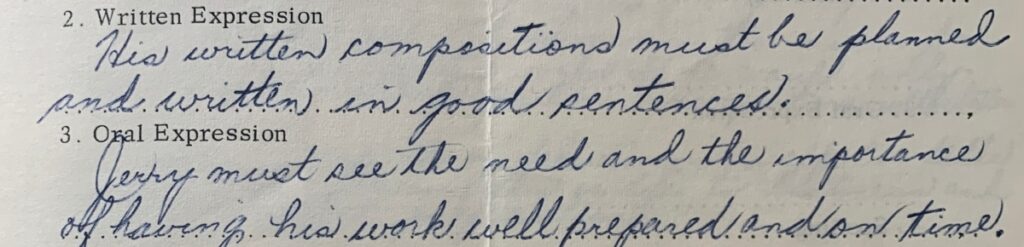
Which my report cards from those grades indicate that I did, but only sporadically, it appears. I still cringe when I read these things:
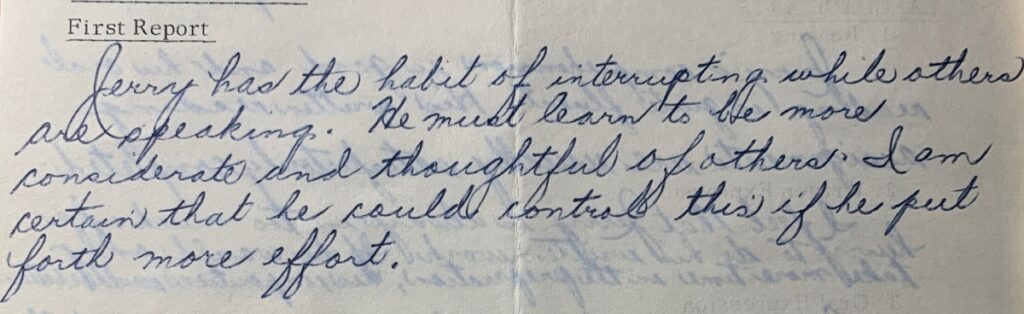
When it came to Reading Club, some of my classmates were definitely more mature and conscientious than I was:
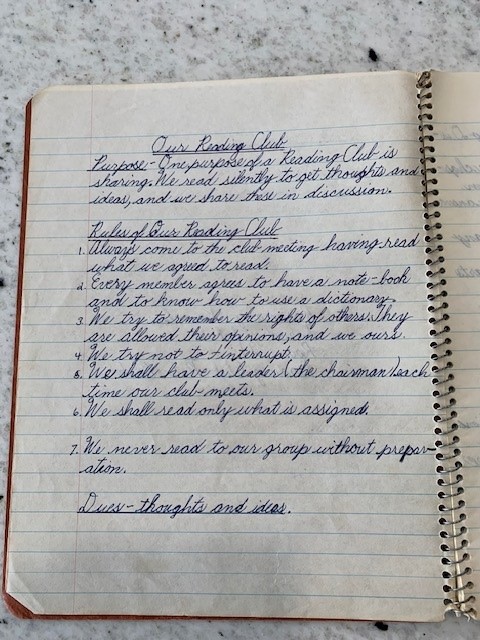
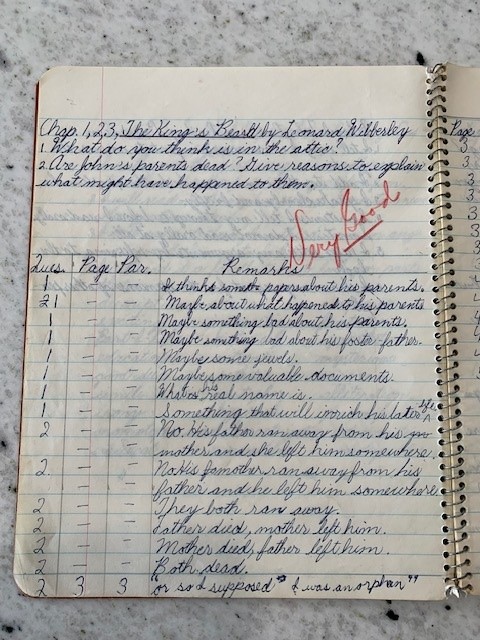
Excerpts from my classmate’s Reading Club notebook. This would have put mine to shame, as my report card (below) attests.
We took much from the “enriched” Major Work learning environment
Even if we didn’t realize it then, we took much from this “enriched” learning environment, both at the time and later in life.
Public speaking
For instance, a classmate ran for high school president a few years later and won in large part because she was the one candidate who wasn’t intimidated by public speaking.
And she wasn’t the only one in our group to become a high school class president or vice-president.
In my own case, knowing how to speak in public has been of great help, too, especially during my time in business, elected municipal office, and coaching.
Curiosoty about the world around us
We also learned how to research topics that were of interest to us. Bear in mind that this was an age when we were closer to the invention of the steam engine than to the advent of the internet (not actually, but only barely), so we had to be creative in our quest for knowledge.
In Grades 4-6, we had encyclopedias, both at school and at home (all American content at the time, unfortunately), but we weren’t afraid to go well beyond that. We thought nothing of hopping on a bus after class and going downtown to the Manitoba Legislature, for instance, to pick up brochures.
Even after we finished Major Work, my buddy and I would bike downtown to see how the Winnipeg Commodity Exchange operated or offer to help candidates in the 1973 provincial election in whatever way we could. This was in addition to whatever else we were doing with a football or hockey stick in hand.
I’m pretty sure others thought us odd in our interests, but we didn’t think twice about engaging the wide world out there this way, thanks to Major Work.
And that research ability sure was crucial to my university years, especially when I was a graduate student.
Reconnecting with my Major Work classmates
In recently reconnecting with several of my classmates from those years, I unsurprisingly found that every one of them had a flourishing career in either the public service (including academia) or the private sector.
And all spoke of using what we learned in Major Work – skills honed over time, to be sure – in those careers, especially those society-focussed leadership skills we were expected to cultivate as “Sputnik’s Children.”
In fact, I was probably the oddball of the bunch, having navigated three different careers, as well as an avocation or two (including elected office and this writing thing).
But I would argue that, even in my case, the soft skills I began to develop during my Major Work years (and enhanced in university) gave me the flexibility to change gears throughout my working life in a way others might not have been able to.
An extraordinary Major Work classmate
One Major Work classmate’s story is particularly interesting. Randolph Peters is a Canadian-based composer with over 100 film scores and a Gemini Award nomination to his credit. And that doesn’t even scratch the surface of what he’s accomplished musically in a very distinguished career.
Randolph joined us in Grade 5. He’d been playing piano since the age of 5 and was already composing by the time he was 10. We convinced our stick-in-the-mud teacher (whom we precocious kids eventually had removed, but that’s another story) to play one of his pieces for us, which he gladly agreed to do.
So he played and played, and then played some more. The piece went on for quite some time. Finally, the teacher asked him when it would be over.
“I don’t know,” he replied. “I haven’t composed that part yet.”
Not your everyday conversation in a Grade 5 classroom.
Russian threat: Should Major Work be revived?
Would any of us have accomplished some of the things we did or seen the world the way we do, had we not been in Major Work? We’ll never know, of course, but it’s difficult to imagine that our enriched elementary school experiences didn’t have at least some positive impact on our lives over the past 55 or so years.
And I’m of course speaking here for only one class, and only a part of it at that. The bit of research that social scientists and journalists have conducted over the years on the Major Work experience is not uniformly positive among the many hundreds who went through it, neither from the perspective of student / parent experience, nor from what educators hoped it would accomplish.
But that should come as no surprise.
After all, it’s not just anyone who could have entered the Major Work stream and embraced the task of beating the Soviets at their own game the way our class did, even if we didn’t realize that’s what the stakes were.
With what the Russians are doing these days, I wonder if it’s too late to revive the program…
On dying & grief series
The Call of Home series
More memoir
The second generation: Life as a child of Ukrainian immigrants
Growing up working class, I wanted to be something else
Our house is not a “Very, very fine house”
Competition: Its unexpected value at every stage of life
Sacred space: This is where you connect with something bigger
Fishing for the ‘Big One’? Forget it – any size catch will do
What you lose when you ignore ceremony and ritual
The value of reconnecting in our “last quarter”
Divorce 25 years on: Our daughter is still reaping the benefits
Letters: The wondrous time capsule I found on my bookcase
Navigating Friendship in My “Last Quarter”
Boating in retirement: The pitfalls of becoming “one” with the sea
The “Mongoose System” recipe for life: Take chances, make mistakes, and have fun
The truth about regret: You are what the results say you are
Cultural cross-currents: What I now know in moving to Canada’s only bilingual province
Happy ending? My family dysfunction would make For better TV
One uncomfortable truth my 18-year-old self needed to hear
Settling for less: How many of us end up doing what we truly love?
Generosity of spirit: The key ingredient to a successful marriage
November 1980: The day I struck a blow for Canada
Turning sixty-five has been a kick in the teeth in a way I never would have expected
Pachelbel, the CBC, and the liberal arts: A surprising connection