
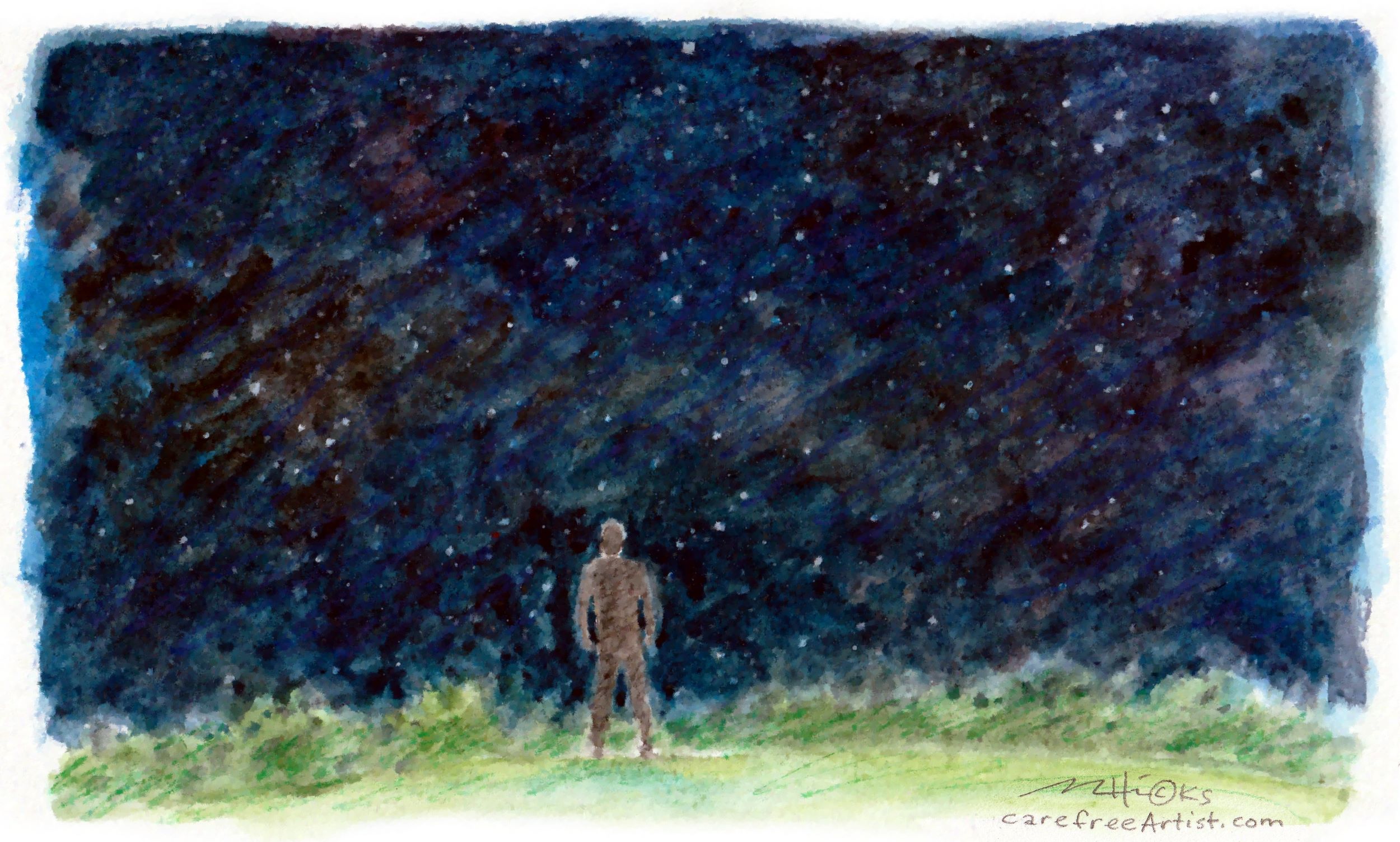
Whether we cry or not, we must not deny love transformed
Not afraid to cry, but…
I cry very easily at certain things.
I cry anytime animals or children are hurt, suffering, or missing; I cry on Remembrance Day, thinking about kids who never came home; I cry during certain movies, and anytime I think about how much I love my wife and daughter. My tears flowed when my last marriage ended, and on the day the bastard Russians brutally invaded Ukraine in February 2022.
But I also sometimes cry for sheer joy: when I think how lucky I am to be able to look out over the ocean from my study every day; when I hear the Hallelujah Chorus in Handel’s Messiah; or when I take a moment to think how grateful I am for the life I have in this, my “last quarter.”
Burying my feelings isn’t my style, but funerals I’ve attended for mature adults over the years have never pushed me over that edge. No one who’s died has been close enough for me to react that way, not my mother, for certain reasons, and certainly not my father.
And the one person for whom I would have cried, namely my high school basketball coach, who remained a lifetime friend until he died in June 2023, didn’t have a funeral.
Our cats are a different story
I’ve never cried as hard as I did on the days we’ve had to say goodbye to our furry, whiskered family members. We’ve had several felines over the years and have loved each one dearly. We watched them grow, then slow down as age takes hold. In most cases, we had to decide when to send them over the “rainbow bridge”.
They seem to have a way of telling us when it’s OK to let them go, but watching the vet put them down is one of the most emotionally draining experiences I’ve ever had to endure. Standing there and watching the life they’ve shared with you leave their little bodies is utterly heartbreaking, even if you both know the time is right. No shortage of tears then.
The first time I had to take one of our guys in, I had to go by myself, as my wife was working and my daughter just couldn’t do it at that younger age. I’m sure the vet wondered whether he’d have to call someone to help me pull myself together, as I was utterly devastated.
“Not the least hard thing to bear when they go from us, these quiet friends, is that they carry away with them so many years of our own lives.”
Why do we cry in some situations but not others?
When parents die, the strength of the bond between child (of whatever age) and parent determines the extent of the grief. In good child-parent relationships, the child is likely to feel a profound sense of loss. In contrast, in dysfunctional relationships, he or she is likely to experience a complex interplay of love, hate, guilt, anger, indifference, and relief. People who have healthy, loving relationships with their parents often struggle to understand this.
I didn’t cry when my mother died, but I think this was because I was able to say good-bye deeply and meaningfully beforehand. Frankly, though, my stoic response was also because her passing didn’t leave a gaping emotional hole in my life. Moreover, she was sick, so her death meant that she would suffer no more.
Now, over 25 years later, I miss my mother to the point of having a cry about it from time to time. She died before I married Michele, and I can’t help but think how well the two of them would have gotten on because of their many shared interests, such as cooking, gardening, and houseplants – so many houseplants…
As for my father, I rarely even think about him. I envy those whose relationships with their parents have been shaped primarily by love and acceptance, but that’s simply not what I experienced. With my parents, I allowed my grief to express itself naturally, which is to say temperately with my mother and not at all with my father.
How will my grief manifest over time?
What sort of loss will make me cry? The extent of my grief would depend on how profound my immediate sense of loss is, but that, too, is not straightforward, as some of the people whom I hold dearest are neither nearby nor participants in my everyday life.
But grief doesn’t have a right or wrong way of manifesting. I will cry a great deal more for those who are far away than I might for some of those who are close by. Having history with someone matters when we talk about leaving a void, even though I certainly won’t miss everyone I have a history with. And I will cry for the loss of any child.
The nature of grief
I’m not a grief expert, and I humbly defer to those who are. All I have are my own experiences to draw on, but I am convinced of three things.
Grief is non-linear
Firstly, grief is non-linear and unpredictable – we have no set time to “get over it” or “move on.” In my case, at least, I have a specific set of circumstances that would cause me to cry at someone’s passing – I will grieve in my own way and in my own time, or perhaps not at all. Another person may respond very differently.
Grief is love transformed
Secondly, grief is nothing more, and most certainly nothing less, than love transformed. “The deeper the love, the more profound the grief.”
We have a friend from Northern Ireland who spent many summers with his wife at their house on the nearby Miramichi River. Since we first met, we could see that theirs was a love story for the ages, and his grief in the immediate wake of her unexpected passing a few years ago was the kind of intense, debilitating grief that only a great love engenders.
Some days when we spoke to him, all he could do was cry.
We should not deny grief
Thirdly, we should not only accept our grief (however it manifests), but embrace it as an essential element of the full spectrum and richness of life. Under no circumstances should we ever suppress it. If we want to cry, we should cry.
We don’t engage the full spectrum of our emotional existence unless we embrace all aspects of it – even for the losses that seem unbearable at the time.
It’s not that I don’t cry at most funerals because I’m holding back – it’s that I don’t feel the need. But I would never want to deny myself the journey through the hellfire of grief, as this would be no different than denying my love for that person when they were alive. I would be the lesser for doing either one.
“Funny thing about grief, its hold is so bright and determined like a flame, like something almost worth living for.”
Excerpt from poem by Ada Limón, “After the Fire”
The poison of “toxic positivity”
“Toxic positivity” (the dysfunctional emotional management idea that we should avoid negative thoughts altogether) often surrounds the grieving process. How many of us have heard expressions such as “He’s in a better place now”, “Everything happens for a reason”, or “Look at the bright side”?
These old bromides are absolute nonsense, for we deny our own humanity in avoiding pain.
“Everything worthwhile in life is won through surmounting the associated negative experience. Any attempt to escape the negative, to avoid it or quash it or silence it, only backfires. The avoidance of suffering is a form of suffering. The avoidance of struggle is a struggle. The denial of failure is a failure. Hiding what is shameful is itself a form of shame.”
Mark Manson, The Subtle Art of Not Giving a F*uck: A Counterintuitive Approach to Living a Good Life
We face real danger in denying grief, and I’m personally not wired to do so. I will grieve when I must and stay silent otherwise. At my age, I’ve experienced enough death to understand that every person’s passing is different and will affect me differently.
Some people I will miss, and some I won’t. Some will die too young, while others will linger past the time that they themselves want to remain. I will cry for some and not for others but, for those whose absence would matter in my life, I will grieve – deeply, genuinely, and completely.
The final cry
In the words of Icelandic-Canadian poet, Stephan G. Stephansson, who penned these thoughts when he lost a son for the first time (he actually lost two):
“They say turn from the grave, he’s in Heaven’s warm hands,
Don’t let pain torture you through the years,
But this sorrow I hold, I choose to withstand,
It brings flowers and poems and tears.”
“To My Lost Son” (1895 portion), as adapted for song by Richard White, Andvökur
Can’t say it any better than that.
Note that this is an abridged and updated part of a series originally published on this site in spring 2023
On dying & grief series
The Call of Home series
More memoir
The second generation: Life as a child of Ukrainian immigrants
Growing up working class, I wanted to be something else
Our house is not a “Very, very fine house”
Competition: Its unexpected value at every stage of life
Sacred space: This is where you connect with something bigger
Major Work: We were “Sputnik’s Children” – until “streaming” became a bad word
Fishing for the ‘Big One’? Forget it – any size catch will do
What you lose when you ignore ceremony and ritual
The value of reconnecting in our “last quarter”
Divorce 25 years on: Our daughter is still reaping the benefits
Letters: The wondrous time capsule I found on my bookcase
Navigating Friendship in My “Last Quarter”
Boating in retirement: The pitfalls of becoming “one” with the sea
The “Mongoose System” recipe for life: Take chances, make mistakes, and have fun
The truth about regret: You are what the results say you are
Cultural cross-currents: What I now know in moving to Canada’s only bilingual province
Happy ending? My family dysfunction would make For better TV
One uncomfortable truth my 18-year-old self needed to hear
Settling for less: How many of us end up doing what we truly love?
Generosity of spirit: The key ingredient to a successful marriage
November 1980: The day I struck a blow for Canada
Turning sixty-five has been a kick in the teeth in a way I never would have expected
Pachelbel, the CBC, and the liberal arts: A surprising connection