
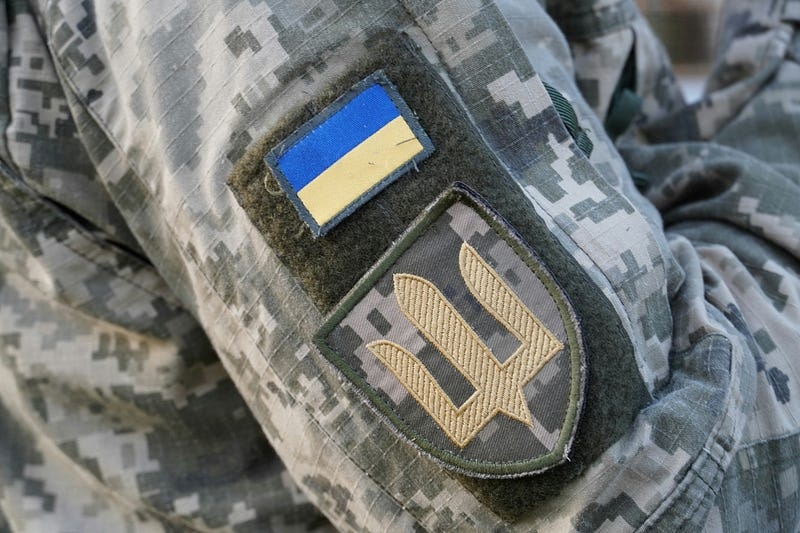
Stoicism preaches equanimity, even in the face of ongoing evil - no easy feat
Stoicism preaches equanimity in all aspects of life
We shouldn’t waste our emotional energy on things we can’t control.
At least that’s what Stoicism says, at its most basic.
We have no say in what happens to us or around us — all we have is the choice of how to respond.
But this is where the challenge of Stoicism arises: how do we maintain equanimity (essentially an “even keel”) in the face of something we care deeply about?
Which brings me round to Russia’s bloody full-scale invasion of Ukraine on February 24, 2022, the fourth anniversary of which recently passed.
The Russian invasion of Ukraine of February 2022
Ukraine is my ancestral homeland. I’ve been there only once, but I have close relatives there and now have numerous friends from Ukraine in Canada, who have settled here after fleeing the ravages of war.
I still read, speak, and write the language, and even have a graduate degree in Ukrainian history, which has served me well all my life in different ways, but especially in the past four years.
So I understand the situation in some depth, including the fact that Russia has been trying to subjugate Ukrainians and quash the idea of Ukrainian nationality and statehood since 1654. What it’s doing in Ukraine today is not new.
Stoicism and the invasion
Among several cousins in Ukraine, I have one with whom I stay in regular touch. He’s not near the front lines, but he keeps me up to date with when the Russians bomb civilians in that part of Ukraine (it’s almost always civilians). The Russians wouldn’t want any region to feel left out, you know.
And despite the challenges that the invasion has created, my cousin and his family have welcomed a refugee family from the conflict zone in the east to live with them full-time, so my wife and I help when we can. I’m tangibly connected to events and currents in Ukraine.
All this to say that I care deeply about what happens there, both geopolitically and personally. I care that Ukraine remains an independent democratic state outside Russia’s evil orbit, and I care that my family is safe and looked after.
I cried my eyes out on the morning of the invasion — it wouldn’t be the last time. And many times since, I’ve had to take extended breaks from listening to news and analysis about the war because doing so every day was taking a toll on my mental health.
Not a stoic way of approaching something external to me, and certainly not a response based on the philosophy of Stoicism either.
What is Stoicism?
Stoicism is a fascinating and often misrepresented philosophy, cosmology, and way of living, with roots in the ancient world.
Although I’ve done a fair bit of reading about Stoicism, I’m definitely no expert, neither in understanding it in depth nor in living according to all its tenets. It’s a comprehensive and sophisticated philosophy of life, with much more to it than just not crying when bad things happen.
But two aspects of it really strike me. One is the concept of amor fati — “love of fate” — the idea that we should not just accept what happens in our lives, but embrace it, good or bad.
Another is the concept of apatheia — freedom from passion. One book on Stoicism I read even suggests that we should limit our attachment to people because this will lessen the pain if we were to lose them.
I’ve got little issue with the first, as battling and complaining about every difficulty we encounter in life makes for a short road to poor mental health. Besides, practising equanimity in the face of small obstacles is supposed to make it easier to maintain that same “even keel” when something big comes up.
I understand the reasoning behind that one.
Where I clash with Stoicism
But I struggle with the second concept.
Should I stop loving my daughter so much just in case the unspeakable worst happens?
Or, more to the point of this piece, should I stop caring for my ancestral homeland and what happens to it?
Should I temper my attachment to the people I love who live there so I don’t miss them when one of those fucking Iskander ballistic missiles or Shahed drones happens to find its civilian mark in that part of Ukraine??
I understand that the Stoicism-based approach would undoubtedly be more nuanced, but some things in life are impossible not to care about at depth. Moreover, we lose something of what it is to live a full, rich life when we deny strong emotional attachments, especially toward our loved ones.
Simon and Garfunkel sang, “I am a rock,” but at what cost?
Somewhere between the extremes of pure detachment and being a constant emotional basket case lies a healthy response balance.
Stoicism: I can choose how to respond, but I can’t detach
Striking that balance is the challenge, though, at least for me, especially on days when I hear how many Ukrainian civilians the Russians have killed (no day goes by without at least some). I’m left with some combination of sadness, anger, and helplessness.
That grab-bag of emotions doesn’t make me sound like much of a practitioner of Stoicism, does it?
But at the same time, I have found ways to channel those emotions constructively. Besides carefully curating what and how much I read and listen to stories from or about Ukraine, I have also written and taught extensively about the invasion and its aftermath, especially in its first 18 months.
I’ve also helped some Ukrainian families settle here in my province of New Brunswick and have continued to support my relatives in different ways.
No emotional detachment, to be sure, but these are the things I can control. I don’t have any way to stop what’s happening in Ukraine, but I do have a choice about how to respond, so that’s what I’m doing.
Does it feel like enough? Hardly. And I’d be kidding if I said that doing those things has quelled my emotions, especially my anger toward Russia, but also toward Ukraine’s allies, who for four years have given Ukraine enough “to stay in it but not win it.” Topic for another time.
I’ll leave it for others to judge whether I’m maintaining enough of an “even keel” in the face of the abject evil being foisted upon my ancestral homeland every day.
I doubt any true student of Stoicism would give me a passing grade, but I can’t stop caring deeply and completely. I just can’t.
And I’m OK with that.