
What reconnecting with the people and places of our past can tell us about ourselves
We’re captive on the carousel of time
We can’t return, we can only look
Behind from where we came
And go round and round and round in the circle game
Joni Mitchell, Ladies of the Canyon (1970)
Consensus that reconnecting with our past is a good idea
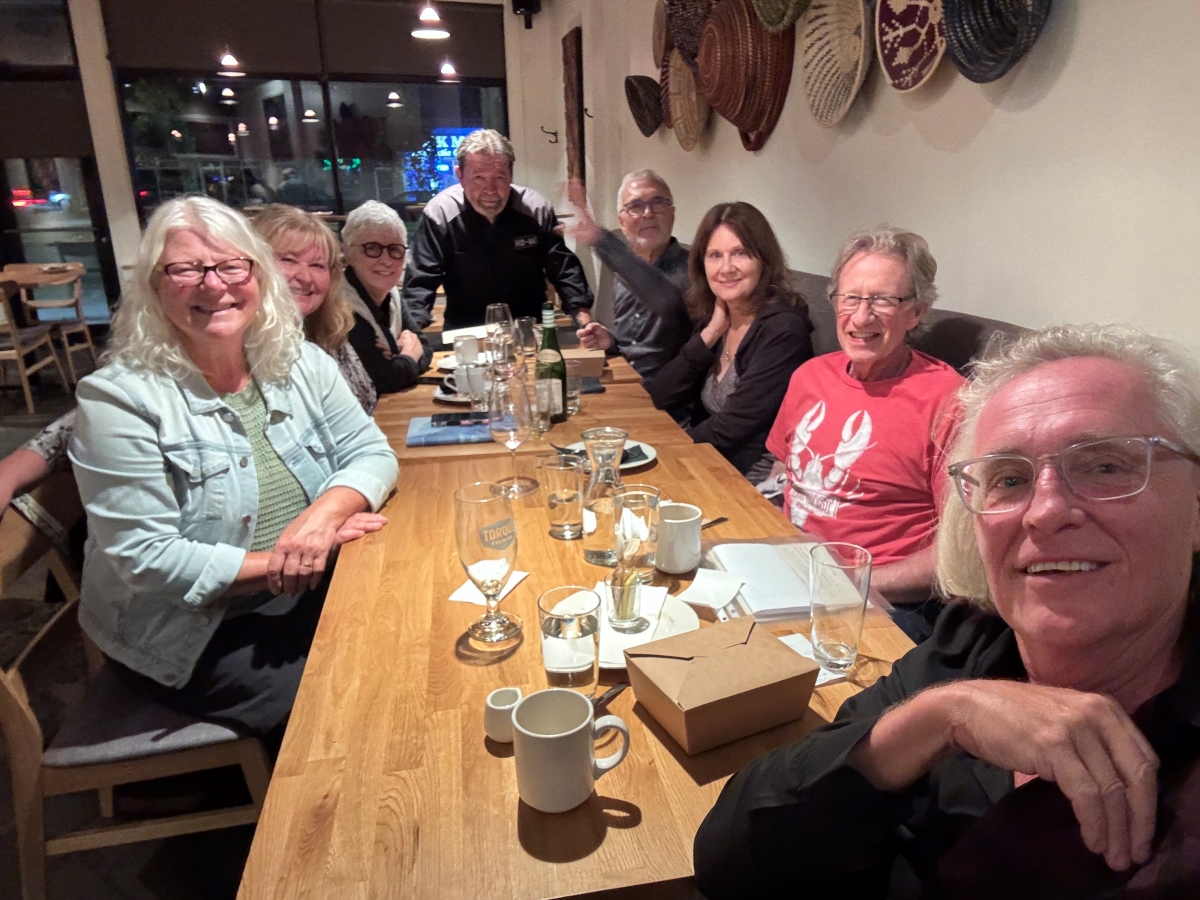
There we were around the table, eight of us elementary school classmates, all more or less 66 years old now, some of whom I hadn’t seen in 54 years. And none in the last 40.
(I’ll save the full story of why this group from Grades 4–6 was so special for a future piece.)
When I suggested to everyone that, at this age, reconnecting with our respective pasts felt important, everyone nodded in eager agreement.
Which told me I wasn’t the only one who felt this way. But the question is, “Why?” Why are many of us called to revisit the people and places behind us, and what does doing so tell us about ourselves? Is it even always a good idea?
Reconnecting with my hometown
This past August, I visited my hometown of Winnipeg, Manitoba, where I’d not lived since 1984, for a week. With both my parents gone, it had been quite some time since I was there— in fact, I couldn’t even remember the last visit.
It started with a couple of opportunities to get together with certain friends, which made me realize how much I was yearning, in the fullest sense of the word, not only to reconnect with them (and others), but to see where I’d grown up through my now seventh-decade eyes.
What’s changed? What’s stayed the same? How would I feel when I drove past the two houses where I grew up? Did I still feel a sense of connection to any of it: the people, the houses, the places where we tossed footballs to each other in the summer and fall or shot pucks around when it was -30°?
Did I still carry Winnipeg with me in any way?
With my wife’s blessing, and despite the possibility of an Air Canada flight attendant strike, off I went (the strike ended just in time). The week-long trip to my old haunts turned out to be everything I’d hoped for, and then some.
Reconnecting with all sorts of people from my past
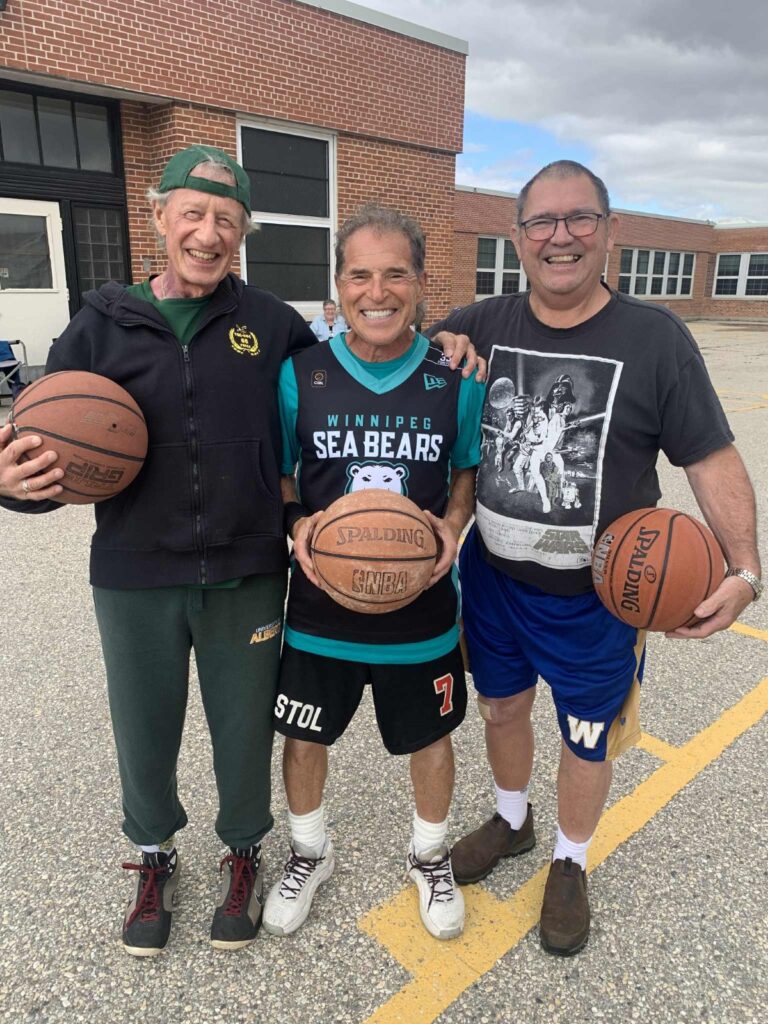
I got together with several of my very special elementary school classmates, surprised the hell out of my former high school basketball teammates at a shootaround they hold every year, ran into several people I knew well from my childhood involvement in Winnipeg’s Ukrainian community, and had coffee with a fellow University of Alberta alum now living in Winnipeg.
I also took an hour’s drive out to a place called Ukrainian Park on the shores of beautiful Lake Winnipeg, where I attended summer camp as a child and participated in all manner of questionable activity as an older teen (absolutely none of which I will be writing about in any future piece).
Fittingly, I sat on the sandy shore and drank a beer by myself, toasting all that had happened there so very long ago.
Then, back in Winnipeg, I even had a wonderful lunch with my high school girlfriend, to whom I felt I owed a long-overdue in-person apology. Which she graciously accepted, much to my delight.
Reconnecting with the places I used to live
I did end up driving by both houses where I grew up, having lived in the first until I was 5, and in the other until I was 19, as well as for a short while thereafter, when I was 24.
My parents bought the first one in 1958, their first owned property since arriving in Canada in 1954. It was around a century old, and it definitely looked its age. But what hit me the most was how utterly small it looked. Reconnecting with it was almost eerie.
There was a fence around the rear yard when we lived there, but not anymore. When I was a toddler, I thought it was about a million miles between the back porch and the fence along the lane. But, when I looked at it this time, I figured I could clear the whole distance in two, maybe three steps.
And somewhere in that postage stamp, my mother kept a garden, too.
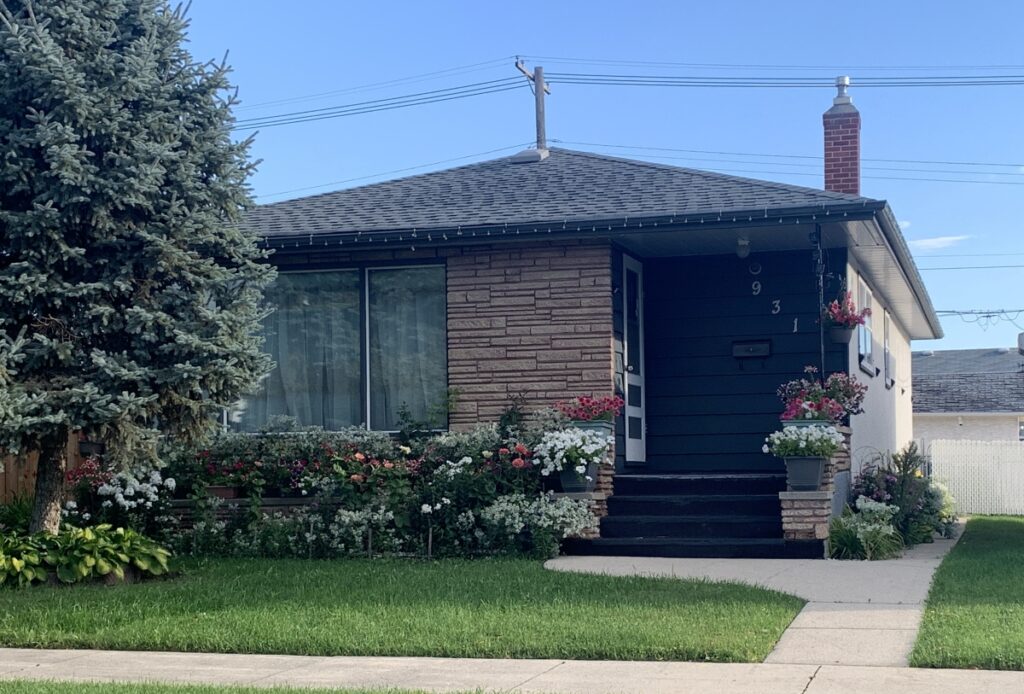
As for the second house, going there re-awakened some difficult memories. But when I drove by and saw that there were as many flowers in the built-in beds around the house as my mother had ever planted there (and likely more), it brought a tear to my eye, as the yard looked absolutely joyful.
This may well have been the last time I’ll ever lay eyes on this house. If so, at least all the vitality and colour I saw that day allowed my darkest memories to fade, even if just a little. And I took some comfort in knowing that my mother would have been so pleased to see what they’d done with the place.
The old homestead
Completeness and perspective as a result of reconnecting
Everything I did, everyone I saw, and every place I went in and around Winnipeg seemed to give me a sense of completeness and perspective I discovered I needed at this stage, even if I didn’t always know it.
My hometown of Winnipeg didn’t feel like “home” in the way our little corner of New Brunswick does, but I was thrilled to be reminded of my multiple connections to it during the visit.
“It is well with my soul,” I thought to myself as I flew back from the Manitoba capital. With all the reconnections I’d made, I felt full.
But I was still thinking about why reconnecting at this stage of life was so profoundly meaningful.
Why reconnecting matters
With my magical trip now in the rear-view mirror, I think I have a better idea of the reasons.
The big picture
One is that circling back can help make some sense of it all — the progression, the big picture, the things that have contributed to making you who you are.
In my case, my elementary school classmates are one example of that. We were in one of the several Winnipeg “Major Work” classes for students with supposedly higher IQs (emphasis on “supposedly” in my case, but tests never lie, do they?).
It wasn’t until we started reminding each other of some of the advanced learning we did in “Major Work” that I began to understand why I embrace the written word, read voraciously, am comfortable with public speaking, and was unafraid to serve in public office during my life.
Certainly, I refined those skills and proclivities as life went on, but it all started in those classes, and I don’t think I realized the extent of it until I touched base with those classmates.
Even driving by the places where I grew up helped make sense of some things for me, especially in understanding and appreciating how far I’d come from some of those rocky years.
They also provided context for the mistakes I’d made and profound appreciation for my own family being on a very different path from the one I was forced to travel when growing up.
Passage of time
Another reason for wanting to reconnect with people and places from our past is that it gives us a deeper understanding of the passage of time in our lives. It reminds us of how long the whole span is while removing the focus from how much may be left.
Perhaps reconnecting with our past even slows time down for a moment, just as it seems to speed up ever more quickly at this stage of life. For a moment, I felt like everyone around that elementary school reunion table was 12 again, with our whole lives still in front of us.
It also encourages gratitude for still being here, as no conversation with “last quarter” peers comes without mention of who has already left us.
My elementary school classmates know of at least one among us who died from cancer at 52, while my high school basketball team has lost two: one from trying to break up a knife fight, and the other from accidentally getting his head smashed into a wall during a senior-league basketball game, of all things.
We who are left have more time, and spending some of it with each other enriches whatever moments are still ours to enjoy. There’s great comfort in that at this stage.
Righting some wrongs
A final reason for reconnecting in our “final quarter” is that it may provide an opportunity to right some past wrongs. I mentioned the apology to my high school girlfriend, but she wasn’t the only one (not even the only girlfriend) who deserved, and got, a mea culpa from me.
And I wouldn’t have gone down that road with anyone, had I not decided to revisit my past by re-reading some letters from over 40 years ago. That process itself gave me a better picture of some of the mistakes I’ve made and some of the people I’ve hurt along the way.
Of course, you can’t undo past transgressions, but you can certainly own up to them, even if it’s a decade or two (or four) later. In some cases, an apology might never be enough, but all you can do is offer it — you have no say in whether it’s accepted or not. Doesn’t mean you shouldn’t try, though.
At the very least, reconnecting with your past provides insight into who you have been and who you have become. As it was for me, you gain a better understanding of who you are (and who you are not) as a whole person, flaws, mistakes, and all.
And if we’re aware of those, perhaps there’s still time to make some things right.
Reconnecting has risks, but it’s worth it
Does reconnecting with the people and places of our past have risks? Of course it does, as you may well discover some harsh realities. But you’ll also likely gain a better sense of who you have been and who you are in your “last quarter” and, more importantly, the road you took to get there.
Perhaps this journey of reconnecting will even enable you, in Joni Mitchell’s words, to “drag your feet to slow the circles down.”
Even if just for a week.
On dying & grief series
The Call of Home series
More memoir
The second generation: Life as a child of Ukrainian immigrants
Growing up working class, I wanted to be something else
Our house is not a “Very, very fine house”
Competition: Its unexpected value at every stage of life
Sacred space: This is where you connect with something bigger
Major Work: We were “Sputnik’s Children” – until “streaming” became a bad word
Fishing for the ‘Big One’? Forget it – any size catch will do
What you lose when you ignore ceremony and ritual
Divorce 25 years on: Our daughter is still reaping the benefits
Letters: The wondrous time capsule I found on my bookcase
Navigating Friendship in My “Last Quarter”
Boating in retirement: The pitfalls of becoming “one” with the sea
The “Mongoose System” recipe for life: Take chances, make mistakes, and have fun
The truth about regret: You are what the results say you are
Cultural cross-currents: What I now know in moving to Canada’s only bilingual province
Happy ending? My family dysfunction would make For better TV
One uncomfortable truth my 18-year-old self needed to hear
Settling for less: How many of us end up doing what we truly love?
Generosity of spirit: The key ingredient to a successful marriage
November 1980: The day I struck a blow for Canada
Turning sixty-five has been a kick in the teeth in a way I never would have expected
Pachelbel, the CBC, and the liberal arts: A surprising connection