

If you’re relocating, prepare to face this stark reality about friendship
“Wanna come out and play?”
When you’re a kid, making friends can sometimes be that easy. Not for every kid, to be sure, but for many.
But for those of us in our “last quarter?” Not so much.
And this can be a real problem as we age, particularly since isolation and loneliness are increasingly recognized as serious detriments to mental health.
“Friendship” is a term that cuts a wide swath. It can refer to two people who share the most intimate of secrets, but it can also mean two people who are well acquainted, but not necessarily “bosom buddies.” The best visual explanation I’ve encountered is friendship as a series of concentric circles around each person, with the dearest friends in the closest circle and acquaintances in the circle furthest out. And then all the gradations in between.
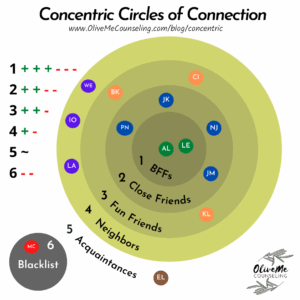
People come into our lives at different times, for different reasons, and for different durations. Some become lifetime friendships at a profound level, while others serve a temporary purpose for both parties, with the definition of “temporary” varying.
Different levels of friendships
In my case, I think of the solid friendships I had for many years with kids who lived across the lane, but whom I rarely saw again after I went to a different high school than they all did.
Then, there was a friend I had known since we were 9, through both Ukrainian cultural activities and elementary school – we parted ways about six years ago, when I was 60, after I realized how problematic that relationship had been over the years.
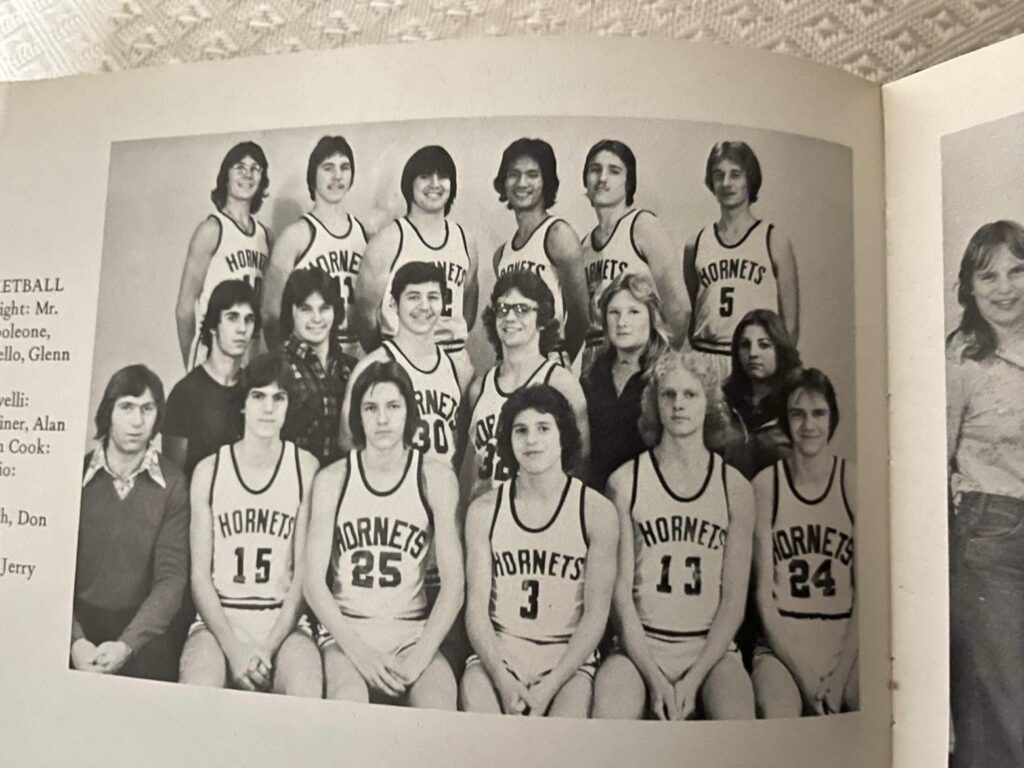
Special friendship bonds are also forged in common pursuits, such as the military or being on the same sports team. I’ve no personal experience with the first but count among my lifelong friends my high school basketball teammates and the rec hockey team I played with for eight years in my 30s and 40s. Many of us have continued to stay in touch, and I deeply treasure those friendships.
In that same vein, I also have lifelong friendships from my occasional pursuit as an amateur musician, my time serving in public office and working behind the scenes for others in public life, and in being part of the Ukrainian-Canadian community in Manitoba, Alberta, and now here in New Brunswick. I’ve also made some dear forever friends in university and later in mid-life, particularly from the years I coached youth basketball.
Some people are in closer concentric circles than others, but I carry each one with me as I age. Each is a part of me.
Work friendships are their own category
Interestingly, I have only one close friendship from my working days, but I knew him from rec hockey before I ever worked with him.
Work friends seem to be a different breed—you may have shared a common pursuit in your employment, but that doesn’t necessarily mean you’ll be friends outside of work, and it definitely doesn’t mean those friendships will continue into retirement.
Being in close proximity to your friends
We’re fortunate if we can maintain some of those lifetime friendships into our later years. We’re even more fortunate if at least some of those friendships can be cultivated in close physical proximity.
Years ago, we decided to relocate from the Camrose, Alberta, area to New Brunswick on Canada’s East Coast, a distance of almost 4,300 km. We had a wonderful circle of friends in Alberta but moved here because my wife wanted to be closer to family, and I wanted to live near the ocean. While those particular things have panned out (mostly), we knew there would be a trade-off, the most significant of which would be distance from our friends.
Sure, it’s been easy to cultivate those closest friendships because of today’s technology, but there’s no such thing anymore as a spur-of-the-moment, “Hey, do you want to go to the game with me?” Or “How about going for a beer on Friday?” The best we can do at a distance now is to start a group chat while we all watch the same game on TV. That’s OK, but it’s not the same.
To say I miss having those people close by (and do so love when they come visit us, which many have) would be a massive understatement, even if I’m saying it while looking out over that dreamed-of ocean.
What about new friendships?
That’s far easier to say than to do in the “last quarter,” as we’ve learned since moving here. Sure, we’ve made some wonderful new friends (and have the best next-door neighbours in the world), but later-in-life friends are not those with whom you have a history, where you laugh so hard about some stupid little thing that your belly hurts. Or reminisce about something you did together years ago (but probably shouldn’t have).
What’s more, potential “last quarter” peers already have friendships and family relationships and are therefore rarely on the lookout for someone new in their lives – I certainly felt this way myself after 55, while still living in Alberta. People have established routines and are already clear (whether realizing it or not) about how much time they’re willing to allocate to friends, especially to someone who’s a Johnny-come-lately.
Don’t get me wrong – we love it here, but the best we can realistically hope for with new friendships in our “last quarter” is the odd meal or get-together. Anything more than that would be a bonus. And we shouldn’t take this personally – after all, in coming from away, we’re the ones who are upsetting the apple cart, or at the very least trying to squeeze on one more apple when the cart is already full.
What if you’re married to your best friend?
But there’s one more thing critical to the whole conversation about friendship in the “last quarter:” It’s that my wife is my best friend.
Which is absolutely great, and a dream-come-true every single day of my life. And it’s not that we do everything together (although we certainly do much of that, too), it’s that we support each other in everything we do. The best kind of friendship.
But what happens when one of us goes, whether by death or dementia? This is where it remains essential for us to cultivate friendships outside the home before that happens, even if the effort doesn’t always bear fruit in the short term.
The usual suggestions of joining groups, accepting invitations to gatherings, or participating in some sort of physical activity with others (pickleball, anyone?) are sound. Easier for some than for others, I know.
All this might not lead to deep, snot-bubble-laughter friendships of the kind you made when you were younger, but it might just be exactly what you need in the “last quarter,” especially when moving someplace new.
And who knows? It could be as easy as knocking on someone’s door and asking them, “Wanna come out and play?”
On dying & grief series
The Call of Home series
More memoir
The second generation: Life as a child of Ukrainian immigrants
Growing up working class, I wanted to be something else
Our house is not a “Very, very fine house”
Competition: Its unexpected value at every stage of life
Sacred space: This is where you connect with something bigger
Major Work: We were “Sputnik’s Children” – until “streaming” became a bad word
Fishing for the ‘Big One’? Forget it – any size catch will do
What you lose when you ignore ceremony and ritual
The value of reconnecting in our “last quarter”
Divorce 25 years on: Our daughter is still reaping the benefits
Letters: The wondrous time capsule I found on my bookcase
Boating in retirement: The pitfalls of becoming “one” with the sea
The “Mongoose System” recipe for life: Take chances, make mistakes, and have fun
The truth about regret: You are what the results say you are
Cultural cross-currents: What I now know in moving to Canada’s only bilingual province
Happy ending? My family dysfunction would make For better TV
One uncomfortable truth my 18-year-old self needed to hear
Settling for less: How many of us end up doing what we truly love?
Generosity of spirit: The key ingredient to a successful marriage
November 1980: The day I struck a blow for Canada
Turning sixty-five has been a kick in the teeth in a way I never would have expected
Pachelbel, the CBC, and the liberal arts: A surprising connection