

When I got to Hartland [New Brunswick] and got to be news editor of our poor little paper, I was priggishly proud of having been received into the Glorious Middle Class.
Canadian writer Alden Nowlan (1933–1983), on leaving behind a hardscrabble working-class existence in Stanley, Nova Scotia, to enter the hardscrabble middle-class existence of an underpaid small-town newspaper editor
Working-class background
Born in Canada, I grew up in a working-class Ukrainian-speaking household.
My immigrant father’s work and station in life put food on the table and gave him and his family a sense of pride and security.
However, even those times in my life when I ran road construction machinery, pulled out my electrical tools, or otherwise had reason to shower after work rather than before, I never identified as working class. I always had my eye on something ostensibly more “Glorious.”
My working-class father
My father was a truck mechanic. Unlike many immigrants who have to start on society’s bottom rung as unskilled labour, he arrived in Canada in 1954 as a skilled craftsman, having learned his trade as a displaced person in Germany and then in Great Britain. He was therefore fortunate to begin work in his field here right off the hop.
When I was very young, and he worked near where we lived, my mother would occasionally walk me down to his workplace to see him. I remember always enjoying those visits and being awed by the big trucks in the shop.
As I got a little older, he would bring home bits and pieces of work-related discards, including oddball items like hydraulic fittings and wiring harnesses. The latter really caught my attention, as something about electricity drew me in from a very early age. More on that below.
Overall, I remember feeling proud of him, his work, and his working-class status. But I was also starting to notice that other families, especially those I would have seen as more “Canadian,” did some things differently in their lives. They went out for dinner, took vacations, barbequed, and used credit cards, for instance.
Our working-class family did none of those things. I understand now that money was often an issue, but at the time, I saw it as people living their lives in a way I considered more open and adventurous, and certainly more Canadian than ours. And I wanted to be a part of that.
As I eventually learned, what I really wanted was to be more middle-class.
Heading toward a working-class career?
It’s not that I ever looked down on the trades, working people, or the working class in general. In fact, I would have been happy to become a working person when I was young — in the electrical trade, specifically.
When I was about 8, my father kindly commissioned an electrician he knew to design a low-voltage circuit board for me to experiment with and learn how electricity works.
And, boy, did I ever spend a lot of time in the basement with that board, setting up little electrical lights and buzzers everywhere — pieces that my father had purchased or otherwise obtained at work. It’s how I figured out circuit theory.
When I was 14, I began doing “side” electrical jobs for people, illegal though that may have been. I studied the electrical code and had enough knowledge to rewire entire houses by the time I was 15. I was my own boss, charging a whopping $5 per hour (about $33 today).
It beat flipping burgers, and I especially liked the jobs where people had daughters my age. But I digress.
Then, I attended a vocational high school where I trained specifically to enter the electrical trade. I worked in the field as a helper (not an apprentice) for a short time after I graduated, but got laid off after a few months during a slack period, and that was the end of that early-life working-class career adventure.
But the middle class beckoned
But even while undertaking electrical work, I always had an interest in pursuits decidedly more “middle class.” For instance, having found politics compelling from a very early age, I helped with various election campaigns. I was more drawn to the Liberals — who were a party of suits and dress shoes rather than coveralls and work boots — than to the New Democratic Party, which actually represented working people at that time.
I helped produce and occasionally hosted a political and public affairs program on Winnipeg cable TV, and even tried writing a bit now and then, disturbing some shit along the way with the occasional letter to the editor. A friend and I even did some freelance “person in the street” interviews that we hoped CBC would pick up.
Didn’t need work boots for any of that.
I was thrilled to be interviewing and interacting with people such as high-ranking politicians and union leaders — people that my working-class parents heard about on the news, but with whom they would never even dream about having a conversation. Those were simply not their people.
In my own convoluted little world, I fancied myself a burgeoning middle-class big shot, even though anyone looking at my situation from the outside would have laughed at the thought.
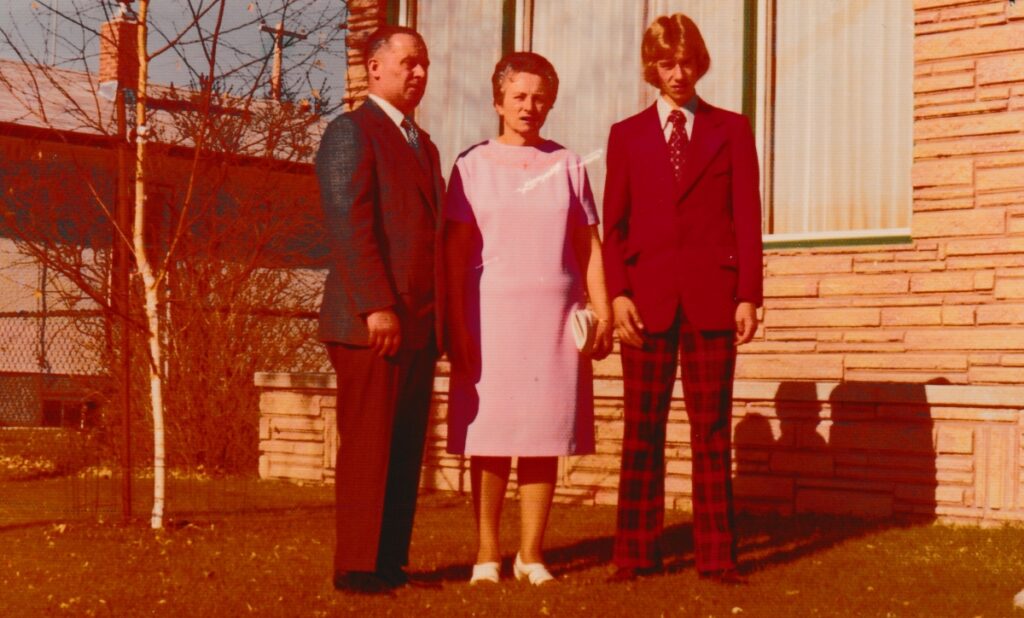
Jumping “up” in class (or so I thought)
As I’ve written elsewhere, I couldn’t find steady work in the electrical trade after graduating from high school. And there was no joy in the unskilled labour jobs I had while twiddling my thumbs and partying like the Rovers in their iconic song, “Wasn’t That a Party” (not kidding). I eventually made my way to university at 20, with an eye on career possibilities that were decidedly middle-class.
And I was apparently in a hurry to jump “up” a class. I received my first credit card, unsolicited, when I was 19. I had arrived, at least according to the credit card company, and I could now take dates to dinner and pay the way middle-class people paid, by saying, “Charge it.”
My buddy and I could even use the credit card to fly to Montréal for the weekend, and I could worry about paying for it later (true story — great time, but I didn’t know that “paying for it later” meant “paying for it over the next 10 years”).
I now had one of the keys for the door to the room labelled “middle class.” Here we have a kid with class pretensions, low self-esteem, and negligible money-management skills (all my parents taught me about money was “Don’t spend anything ever”) — what could possibly go wrong? Big shot indeed.
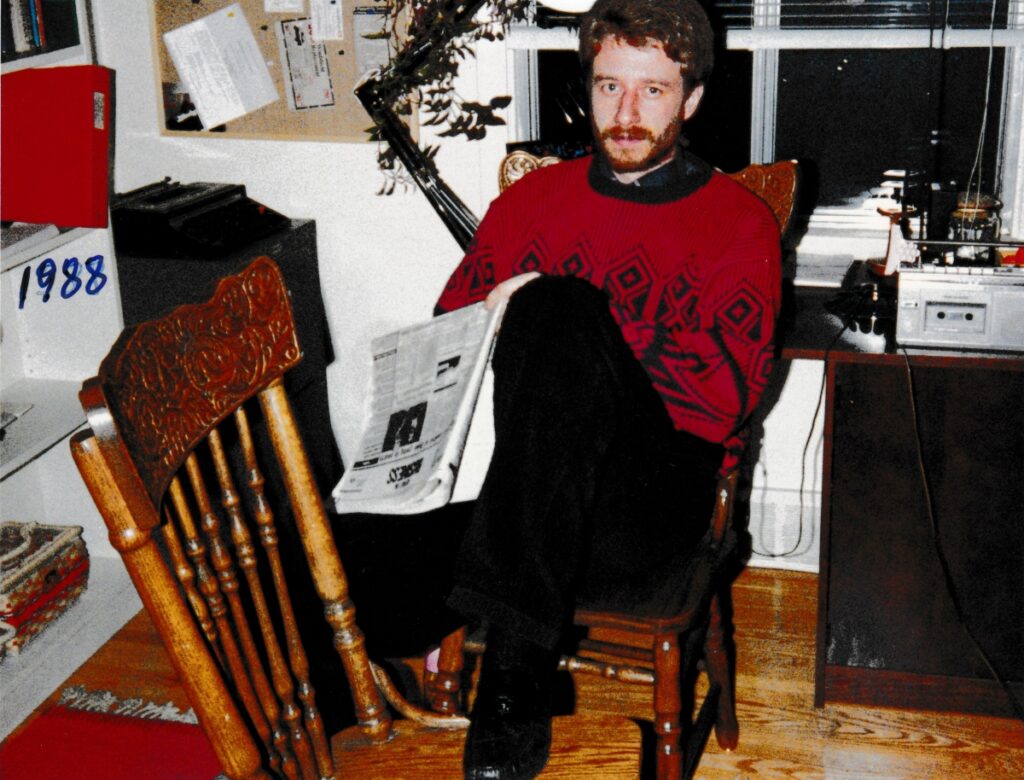
Middle-class careers take flight
All my pursuits from when I finished university at 27 to when I sold my financial services business at age 42 were decidedly middle-class. Having obtained my MA in history, I worked as a public historian for several years before taking a keen interest in financial services and becoming a Certified Financial Planner and later also an Investment Advisor.
Each required decent clothes (except when I was out in the field doing historical research), and I took great pride in wearing suits with silk ties and crisp white shirts. I had an office where people would actually come to see me, if you can imagine, while I sat behind my desk, trying hard to look like my 30-something-year-old self understood how people my age now (66) thought about things like life and money.
I remember my father being quite surprised that I had doctors and lawyers as clients. That was a seminal moment for me — not only had I stepped up in the world (I thought), but my father now knew it, too. In his world, there were working people, and there was the “other.” I was now a card-carrying member of the latter.
Perks of a middle-class career
Being in business, I could now say, “I’m going to the office” instead of “I’m going to work.” Major distinction.
And I now had far more control of my schedule than did those employed by others. I could participate in middle-class activities peripheral to business, such as joining Rotary, serving on the Chamber of Commerce executive, or volunteering as a board member for various organizations.
These were not activities an employed working-class person could do in a typical day.
Over time, I settled into my identity as a professional and a self-employed businessperson, first in financial services and later in property valuation. I had letters after my name — both educational and professional. Unlike when I was fooling myself at 19 with a credit card in hand, I had finally, for what it was worth, become a true member of the “Glorious Middle Class.”
Forays into the working class in later adulthood
To make an already-long story short, I had a couple of forays into the working-class world well into adulthood— once, at 42, when I considered re-entering the electrical field and once, at 64, when I thought driving tour buses all over eastern Canada would be a good pre-retirement gig.
Neither worked out for various reasons, the main one being that I just couldn’t transition from seeing myself as a designated professional, whom people turned to for high-level advice and occasional expert witness testimony in court, to being a regular working person at someone else’s beck and call (and some nasty, condescending becks and calls at that).
My identity was sealed by the time I was well into adulthood. I’d simply come to see the world and my role in it a certain way over all the years I’d spent behind a desk in dress clothes rather than on a job site in coveralls. My eyes were now middle-class eyes.
Mission accomplished, I suppose.
The “Glorious” working class?
Would my life have been the lesser, had I obtained long-term work as an electrician after high school and established myself as a member of the working class? I doubt it — it would likely have turned out differently, but not any less authentic, socially useful, or satisfying.
I could imagine having paid my dues as an apprentice, then a journeyman, and finally a master electrician, empowering others achieve their career goals.
Or perhaps I would have become a lineman, helping string high-voltage cables dangling from a helicopter over a beautiful yawning valley. Or become a ship’s electrician while sailing around the world.
That working-class career could have taken me to places I would never have gone and allowed me to do things I would never have gotten to do.
And no doubt I would have been fulfilled.
Could well have turned out to be “Glorious” indeed.
On dying & grief series
The Call of Home series
More memoir
The second generation: Life as a child of Ukrainian immigrants
Our house is not a “Very, very fine house”
Competition: Its unexpected value at every stage of life
Sacred space: This is where you connect with something bigger
Major Work: We were “Sputnik’s Children” – until “streaming” became a bad word
Fishing for the ‘Big One’? Forget it – any size catch will do
What you lose when you ignore ceremony and ritual
The value of reconnecting in our “last quarter”
Divorce 25 years on: Our daughter is still reaping the benefits
Letters: The wondrous time capsule I found on my bookcase
Navigating Friendship in My “Last Quarter”
Boating in retirement: The pitfalls of becoming “one” with the sea
The “Mongoose System” recipe for life: Take chances, make mistakes, and have fun
The truth about regret: You are what the results say you are
Cultural cross-currents: What I now know in moving to Canada’s only bilingual province
Happy ending? My family dysfunction would make For better TV
One uncomfortable truth my 18-year-old self needed to hear
Settling for less: How many of us end up doing what we truly love?
Generosity of spirit: The key ingredient to a successful marriage
November 1980: The day I struck a blow for Canada
Turning sixty-five has been a kick in the teeth in a way I never would have expected
Pachelbel, the CBC, and the liberal arts: A surprising connection