
Children are supposed to bury their parents, not the other way around
My mother – the first death of someone close to me
Even though death was part of my life in one way or another since I was 9 or 10, it remained on the periphery until I was 40.
That’s when I experienced the passing of someone I would be expected to grieve deeply.
Except I didn’t.
Despite it being my mother, whose death I’d feared so much as a child, her demise didn’t affect me the way we might expect. For me, profound grief would come about later from an entirely different kind of loss.
The rhythm of existence
By the time my mother passed away, I’d encountered death in many situations. I had a financial services business in a small town, and both the profession and the setting ensured that I would encounter death in some way more or less regularly.
Clients, members of your service club, or your church die, some naturally and some tragically. In a rural setting, death becomes a much more visible and integral part of the rhythm of existence, and it’s one of the many events that bring a community together.
So at 40, I was certainly familiar with death and its role in the cycle of life — just not as intimately as some others were. Notwithstanding the passing of one of my high school basketball teammates, I’d had little experience with my own grief to that point.
Children burying their parents is the natural order of things
Both my parents’ deaths occurred within the context of a dysfunctional family dynamic — extended periods of estrangement from my father poisoned the environment in each case. But, at least with my mother, I had a fulfilling and proper goodbye about two weeks before she finally succumbed to breast cancer at age 77 in 1999.
We said everything we had to say to each other that day, as she was fully lucid and capable of communicating when I sat at her hospital bedside. Interestingly, my daughter, who was not yet three at that time, sat with us throughout the entire conversation. We lived far away, so my mother had barely ever laid eyes on her, but because my mother loved her so much, it’s fitting that this bedside visit is one of my daughter’s earliest conscious memories.
I didn’t cry when I heard she’d died, though — maybe because I was expecting it, but more likely because her parting didn’t leave a gaping emotional hole in my day-to-day life. We had no daily or weekly conversations like some children have with their parents, and no regular visits. And whenever I was estranged from my father (which was often), my mother was inevitably and unfortunately collateral damage.
I also didn’t cry when spending some private time with her remains at the funeral chapel before the prayer service. I had a solemn but not sad post-mortem conversation with her, as I had said everything I needed to say at her bedside two weeks prior. Not everyone is so fortunate.
I also shed no tears at her funeral mass or graveside service. With closure but no real sense of loss, I didn’t feel the grief that so many do when a parent dies.
And it’s the natural order of things to bury one’s parents.
Not so when parents have to bury their children
Children’s funerals I attended over the years are what taught me the most about my grief response.
One was for a baby born with some sort of physical deficiency that simply didn’t give the little guy a chance. His parents were good friends of ours, and I can’t even begin to imagine their hurt when they had to let him go in the spring of 2002.
The tiny casket struck me, as did the funeral procession making its way along the street in front of their house and the pervasive sadness that gripped our entire 400-person community. I’d never been part of anything like this.
Unsurprisingly, once you yourself are a parent — my daughter was five at that time — you hurt for other parents at a deeper level. You grieve along with the stricken family, but you cry, too, out of a sense of relief (and not without some guilt for doing so) because you are grateful that fate has not taken your own children in this way.
This was when I discovered what kind of passing would bring me to a flood of tears — not from grief born of my own loss, but of visceral parental empathy.
Children’s suicides cut to the quick like no other
Another funeral for someone’s child I attended some years later was for a young lady from the small town where we had lived for many years, who had taken her own life at age 31. She was about nine years older than my daughter and was part of a large family that included several of my friends.
Funerals in more recent times tend to be different from what they once were. You might hear a playlist of the deceased’s favourite music or watch a video montage of photos from the deceased’s life. This has a way of drawing people, particularly non-family, into that person’s life in a way that a spoken eulogy by itself might not. It certainly did that for me.
I’d been acquainted with this young lady since she was four. Although our families weren’t close, we watched her life unfold, even if only at a distance, so the photo montage at the funeral service was a reminder of a broadly shared community space and the passage of time. It included many familiar faces and places.
But what I thought about most during the service — which was surprisingly open-casket — was how much she must have been hurting to want to end her life, and how much her family members were now themselves in deep pain, one that would last a lifetime. “There but for the grace of God go I” never rang truer.
As a result, this funeral was the most difficult, heart-wrenching one I’d ever attended, and it wasn’t a question of whether I would cry, but of when I might stop. The whole situation was simply unimaginable. I couldn’t wait to get outside so I could call my daughter just to hear her voice.
Children lost in accidents
Then, in 2019, we moved to where we live now, which is a small Acadian fishing village in New Brunswick. Lobster is the catch of the day around here, with our zone open during late summer and early fall.
In late August 2022, our community lost a young man of 15 at sea in a fishing accident while he was on his father’s boat. It was a month before his remains were found, despite the entire fishing community on the Northumberland Strait looking for him whenever possible. And thank heavens they did, as the family would otherwise have had no closure whatsoever.
Even though we didn’t know the boy or the parents well, we certainly attended the funeral to grieve alongside our neighbours.
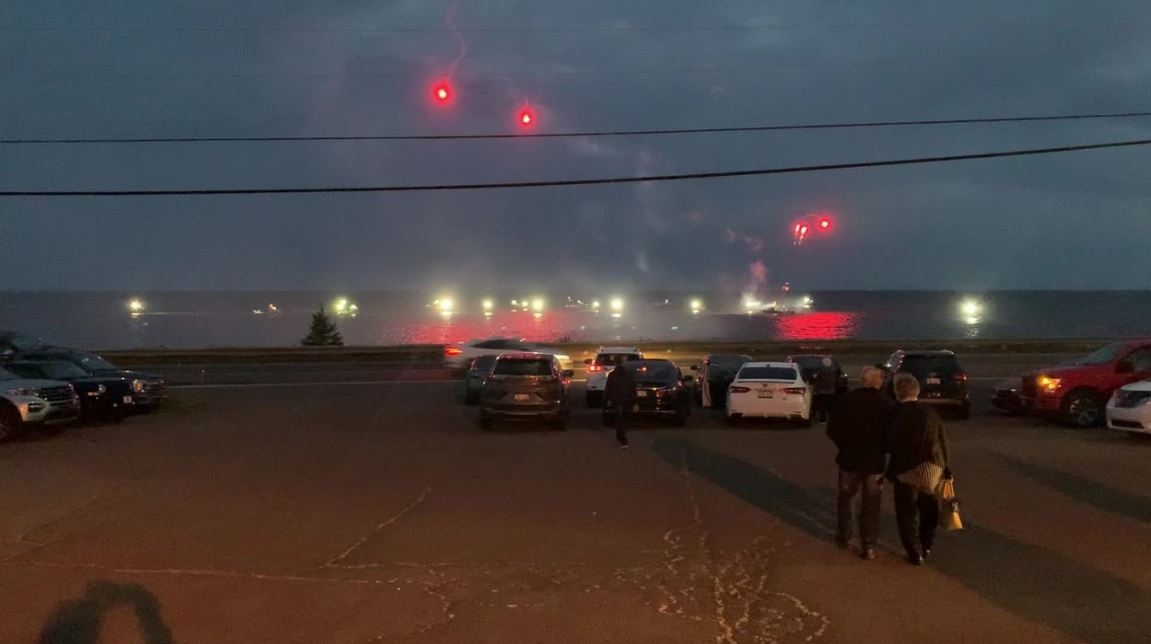
Mourners filled the church, which overlooks the ocean, to overflowing, and even boats in the shallows in front of the church expressed their sympathies by blowing their horns and setting off fireworks.
As we New Brunswickers would say, I’d never heard tell of such a thing before.
The service itself included a row of the young man’s fellow students on either side of the main aisle, each holding a candle, which really pushed me toward the edge, as I’d coached numerous kids exactly that age.
I managed to hold myself together for most of the funeral mass, but once the recession made its way down the aisle and I saw the parents crying their eyes out as they walked behind the casket, I absolutely lost it. I don’t know how parents who have been struck this way manage it — I’m not entirely sure that I could.
Once again, I couldn’t wait to get on the phone to tell my daughter how much I love her.
Entire villages raise – and grieve - children
Over time, I grew ever more to understand that the grief of one parent anywhere is the grief of all parents everywhere. When the natural order of things is reversed, and a parent has to bury a child, the entire child-raising village weeps, whether the parents know the child and the child’s family or not.
My own profound grief responses over time at children’s funerals, especially in contrast to what I’d felt at my mother’s, certainly reflected that.
We may grieve when we bury our own parents — some deeply, some less so — but it’s not the same when someone buries a child, even if it’s not their own. Because, as parents ourselves, we never know when and for whom the boats in the shallows will next be blowing their horns and setting off fireworks.
Best if I never experience that particular ritual again.
Note that this is an abridged and updated part of a series originally published on this site in spring 2023
On dying & grief series
The Call of Home series
More memoir
The second generation: Life as a child of Ukrainian immigrants
Growing up working class, I wanted to be something else
Our house is not a “Very, very fine house”
Competition: Its unexpected value at every stage of life
Sacred space: This is where you connect with something bigger
Major Work: We were “Sputnik’s Children” – until “streaming” became a bad word
Fishing for the ‘Big One’? Forget it – any size catch will do
What you lose when you ignore ceremony and ritual
The value of reconnecting in our “last quarter”
Divorce 25 years on: Our daughter is still reaping the benefits
Letters: The wondrous time capsule I found on my bookcase
Navigating Friendship in My “Last Quarter”
Boating in retirement: The pitfalls of becoming “one” with the sea
The “Mongoose System” recipe for life: Take chances, make mistakes, and have fun
The truth about regret: You are what the results say you are
Cultural cross-currents: What I now know in moving to Canada’s only bilingual province
Happy ending? My family dysfunction would make For better TV
One uncomfortable truth my 18-year-old self needed to hear
Settling for less: How many of us end up doing what we truly love?
Generosity of spirit: The key ingredient to a successful marriage
November 1980: The day I struck a blow for Canada
Turning sixty-five has been a kick in the teeth in a way I never would have expected
Pachelbel, the CBC, and the liberal arts: A surprising connection