
I’m a boomer staying in my house because it’s my home, not because I’m trying to screw another generation
If you’ve never been a boomer...
Don’t judge, they say, before walking 1.6 kilometres (or so) in another’s shoes.
On the August 8 podcast of popular Canadian podcast, The Line, host Matt Gurney and guest host Andrew Potter ventured out on the wobbly plank of intergenerational critique they sometimes like to walk, this time with a critical bead – in part – on younger people instead of just on boomers, as the podcast often does.
Which was fine because, having been young themselves, they’ve seen the world through those eyes. In my view, their comparisons on that front hold water.
Not the same when critiquing those older than they, the boomers, for they’ve never been there. Believe me when I say, at 66, that you don’t truly understand what motivates you in the different stages of life until you’ve lived them yourself.
This is true for Gurney and Potter and perhaps even more so for the waitress Gurney referenced in the podcast, who spoke angrily (as he described it) about the boomers who come from their multi-million dollar neighbourhood homes to lunch at her pub in Toronto.
I’m not sure what exactly angered her. Was it their outrageously expensive homes? Was it that they were staying in those homes longer than she thought reasonable? Or was it that they’ve reached the age when they can afford to kill a few afternoon hours in a way that most younger people can’t? All of the above, perhaps?
Boomer decisions not based on a sense of entitlement
Hard to say, but I do know that these boomers are not doing any of those things just to screw younger generations. In fact, I suspect many (most?) would have a lot of sympathy for those who don’t have the same job and housing prospects that they did when they were just starting out. After all, they, too, have children and grandchildren.
(As an aside, anyone who criticizes the younger generations for floundering because they’re “not pulling up their bootstraps” enough is doing so because they’re myopic, self-satisfied assholes, not because they’re boomers. Every generation includes its share of assholes.)
A topic that resonated for many boomers
I recently wrote an article on Medium (and on this website) entitled “Aging Out of Our Home: Suddenly or Gradually, the Time Will Come,” and I’ve yet to write a story as widely read and commented on as this one. Mostly, if not exclusively, by boomers, unsurprisingly.
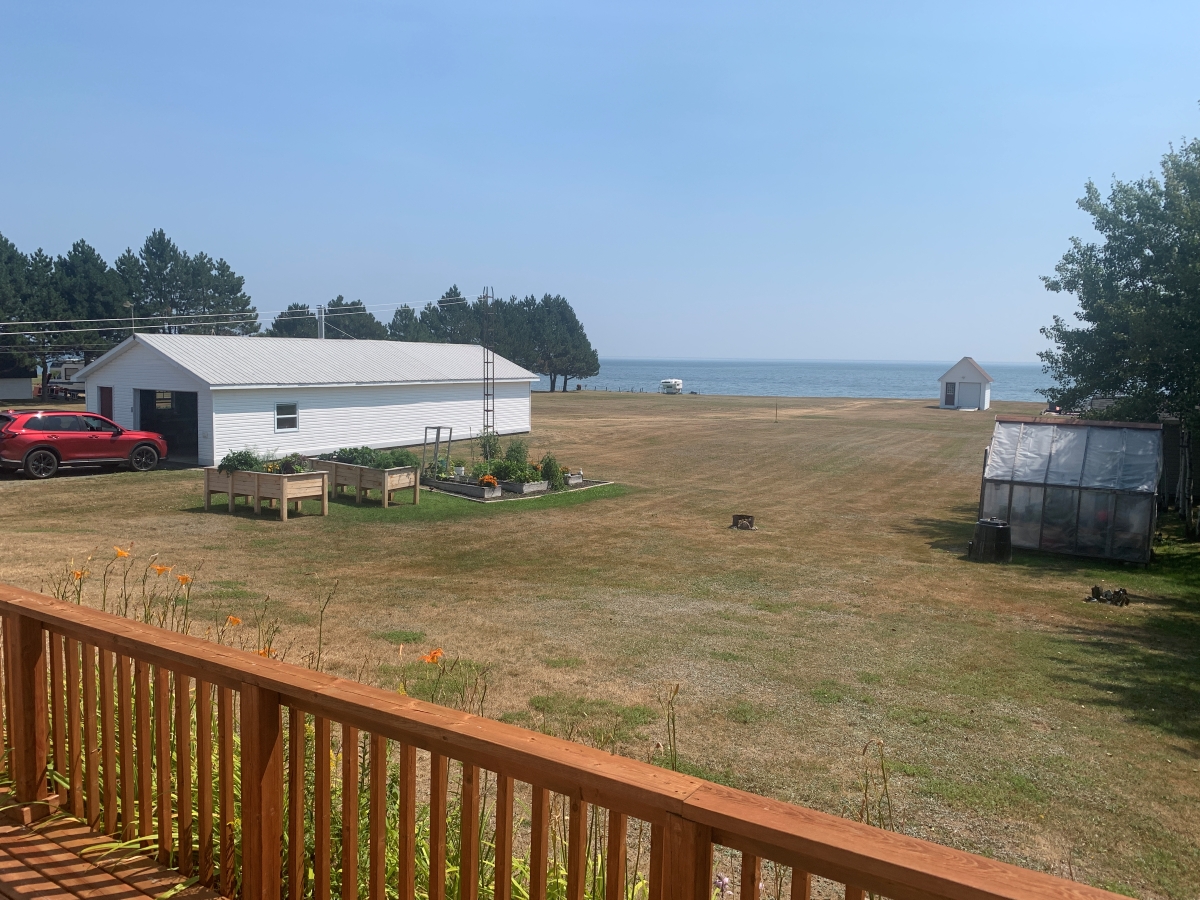
It talks about what makes our current home a dream-come-true, and the fact that, if we live long enough, we will eventually have to move to something less physically demanding than this house with its wood stove and the surrounding 2/3 of an acre with a large driveway. To say the article resonated would be an understatement.
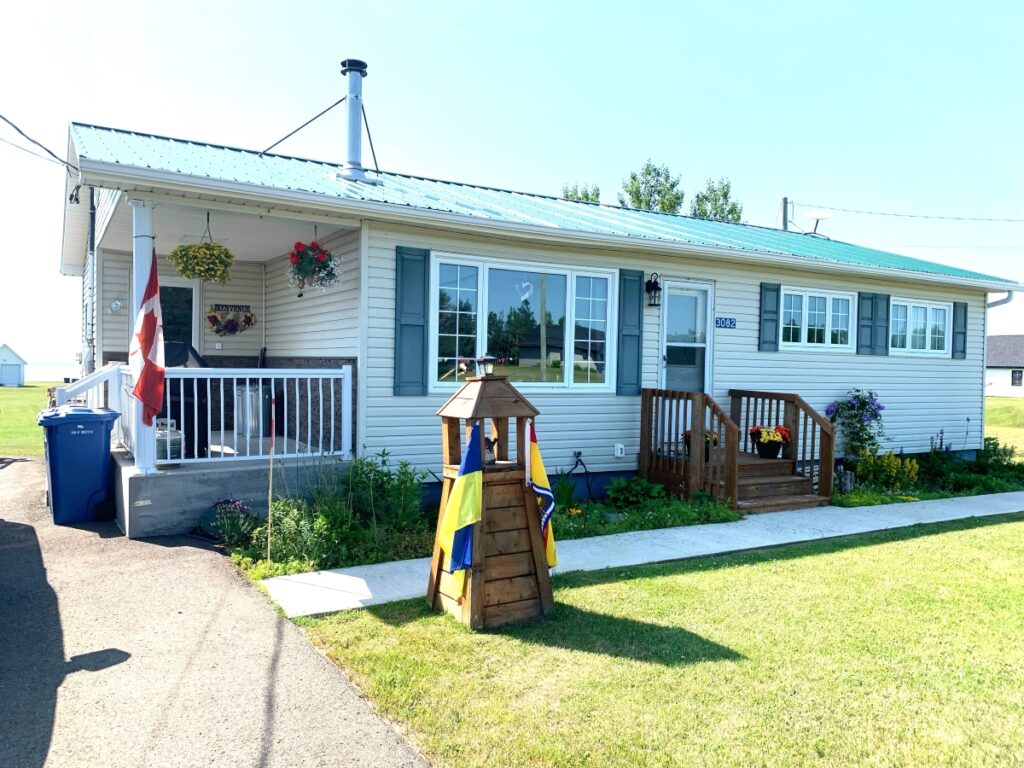
Ours is not a large or expensive home, but it’s perfect for my wife and me right now and, after moving here only six years ago, I don’t relish the thought of leaving anytime soon.
And why would I? We finally live exactly where we want (by the ocean and near my wife’s family), in a house that’s paid off (as a result of both good planning and good luck), with a garden, greenhouse, and flower beds my wife loves to work in, and a yard that I enjoy. Did I mention we’re on the ocean?
I could never have hoped to land in a better place at this stage of my life, both literally and figuratively. I am grateful beyond words.
Home is rarely considered as an investment when you live in it
And here’s the other thing: I don’t give a crap how much the property is worth – it can fall in value by half tomorrow, and it wouldn’t change the fact that we’re content where we are. It would feed my soul even if it were worth only a dollar.
Based on the comments on my Medium story, it’s a misconception that most boomers treat their home as a source of retirement income. Other than the desire to live in a paid-off house, financial considerations have very little to do with wanting to “age in place,” whether the property value is $150,000 or $1,500,000.
It’s all about wanting to stay in a house and community that are comfortable, familiar, and fulfilling. It’s all about wanting to stay home – in all senses of that word – for as long as possible. “Aging in place,” they call it, although some boomers hate that term and just call it “living.”
As one age planner in New Brunswick, who is looking after her elderly grandparents, stated in a recent CBC article, “I really…shifted my perspective [on her initial thought of having them move into a care home] on the importance of keeping familiarity as you age and your local ties…and just how powerful that feeling of home is.”
What are the options for boomers?
And who is the waitress or anyone else to tell us boomers when the time is right to move out of our homes? Is it at age 65? 70? Or some other arbitrary age? And who decides that, and on what basis?
And even if we (as a cohort) were to move out of our homes, where should we go, pray tell? Should we downsize to a starter home that’s ironically more suitable for someone just, you know, starting out?
Or should we move en masse to group retirement homes where the highlight of the day is finding out what flavour of gruel they’re serving for lunch or what colour felt they’ll be using for arts and crafts?
No garden, no yard, no long-time neighbours, no familiar community – little or nothing of the joy and contentment that you may have finally achieved in your “last quarter” in your own home. As one reader of my Medium article said,
As someone who’s recently moved from a house I’ve lived in with my wife for forty years to a condo better suited to our “demographic,” I hope you will listen to me: don’t move. Do whatever it takes to stay where you are. Hire help, take a winter vacation, whatever, but “age in place,” don’t move.
Obviously, downsizing may be fine for some, but not all.
About those shoes...
And I haven’t even mentioned those boomers who don’t feel they can afford to move, in terms of moving costs, potential renovations, or the costs of the new accommodations (if it’s some type of assisted living). It’s not “one-size-fits-all.”
I get it – the current system sucks for young people. Wouldn’t want to be 25 myself and starting out right now, with uncertain (to say the least) job and housing prospects. I truly hurt for them.
Not sure what the answer is, but I do know the answer isn’t to scapegoat all boomers, who have the fortune (or misfortune) of living longer as a cohort and wanting to live out their lives by staying as long as possible in the place they are rooted and call home.
I also know that making an effort to see the situation through the eyes of those who have been there, perhaps by engaging more boomers in conversation, could well make for a more complete discussion about how people in my age cohort see the world.
For those who aren’t here yet, it would be like putting on a whole new pair of shoes to walk that 1.6 kilometres, ones that a couple of smart podcasters or even a hardworking waitress might find comfortable.
More "Other essays"
Stoicism and the invasion of Ukraine: What I now know
Full Steam Ahead or Quiet Contentment?
Conversation: The overlooked truths about what makes it good
Child-centred parenting will do your children no favours
Moving to a new community: What I needed to know
Three important building blocks of a fulfilling retirement
Aging out of our home: suddenly or gradually, the time will come
Chiac, Surzhyk, and the evolution of how we speak
Walking in the Shoes of Another
Ticket kindness: Rekindling our faith in human nature
Politics in decline: Stoop as low as you want, as long as you have a “good reason”
Life in Ireland: Observations by a Canadian visitor
Charlie Killam Cougars 2018-19 season wrap-up (as posted on TeamSnap)