
Forging a new identity in retirement can be costly, if a boat is involved
The purchase
In late 2020, I bought a recreational pump toilet for $8,500.
That may sound like a lot, but when you’re 61, a working toilet that travels with you is worth its weight in gold.
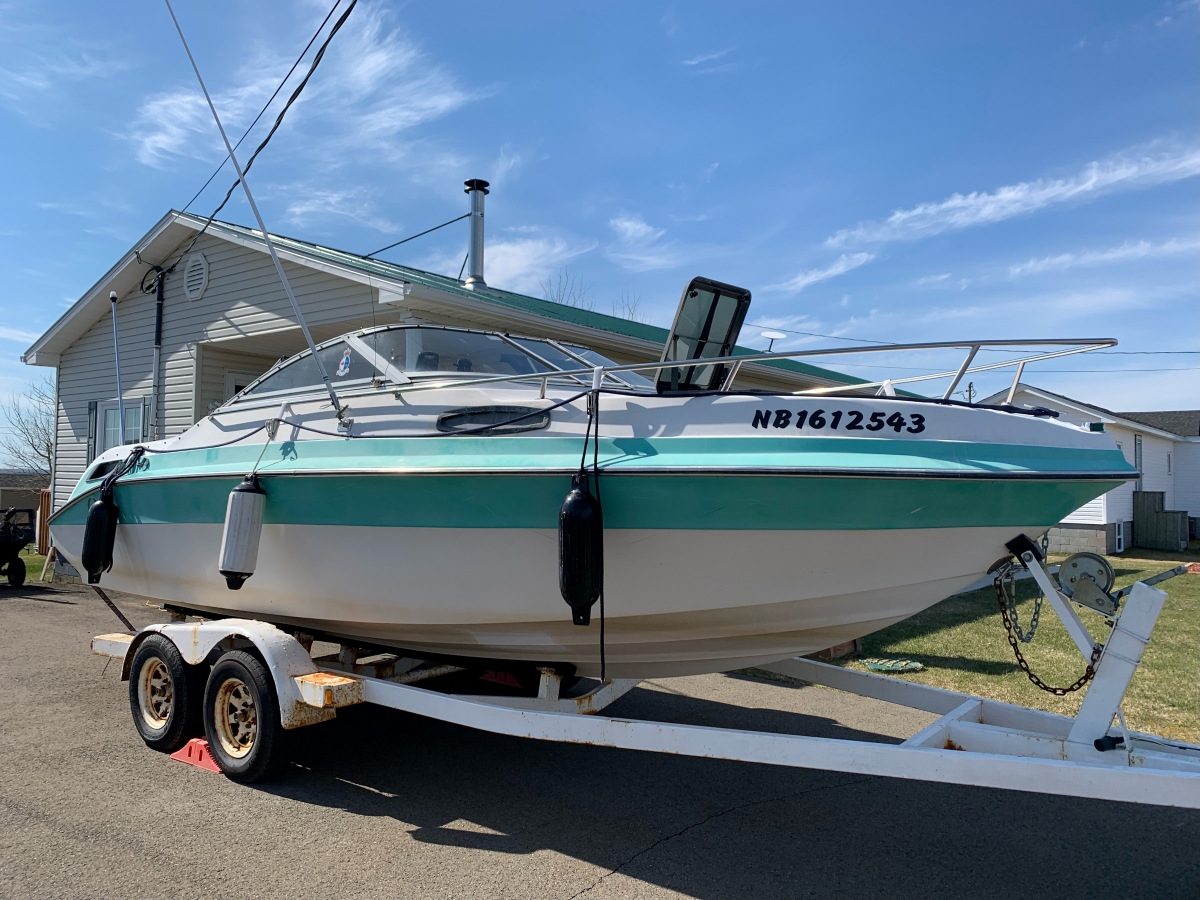
To sweeten the deal, the seller also threw in a 22’ sterndrive boat named Paradise Ain’t Cheap. I should have taken the hint from the cheesy but ultimately accurate name. Or paid him $8,500, taken the toilet, and begged him to keep the boat, as I would have come out ahead.
COVID
My wife and I moved to New Brunswick in mid-2019 so she could live closer to family, and I could live on the ocean. Check and check.
But then COVID reared its ugly head in 2020, severely limiting our recreational options. We were both fortunate enough to keep our jobs throughout the plague but, like many people, we ached for things to do in our free time that were outdoors, interesting, and didn’t involve other people.
As a testament to her love for me, my wife didn’t flinch when I suggested buying a boat. In fact, she encouraged it, despite having no desire whatsoever to spend time on the water herself. She’s a born-and-bred East Coaster but doesn’t like seafood and would rather walk on hot coals than spend time on any vessel or structure where the floor moves. Go figure.
I am the complete opposite. I am enamoured by the ocean and count among my best days here on the East Coast the ones spent with friends and neighbours on their commercial vessels while fishing the Northumberland Strait. You’ve not lived until you’ve steadied yourself on a 44’ fishing boat out on the undulating open sea and helped haul in a net full of herring or hoisted a trap full of squirming lobsters.
I wanted to be “one” with the sea
We were living in a fishing village, and I wanted a stake in that oceangoing life, even if only peripherally. Moreover, I wanted to cultivate a passion and an identity in my impending retirement, and I couldn’t think of a better way to initiate that process than buying a boat while still employed and, more importantly, becoming a boater.
Now, understand that I had minimal boating experience. My wife and I had rented a small boat a few times to go fishing on a small, calm lake back in Alberta, but that was the extent of my nautical experience. So God only knows what made me think buying a 22-foot behemoth as a starter model was a good idea.
Actually, I do know—it was the cozy little cuddy and that damned toilet. It wouldn’t be the last time my aging body functions clouded my judgement.
And the boat did start and run quite well in the seller’s yard.
A wise person would have done much more research on buying the right boat for a first-time boater, how to handle it once purchased, and knowing exactly what is being purchased. I clearly wasn’t that person.
The boat was older than advertised and harder to handle than I thought
Every boat has a serial number on its hull, indicating who the manufacturer was and the year it was manufactured. I know this now, but I wasn’t savvy enough to research something so fundamental when I was purchasing the damn thing. It was advertised as a 2002 model, but I found out much later that it was actually a 1991. There’s a lot of extra wear and tear in those 11 years.
For the record, I don’t think the fellow who sold me the boat was any savvier than I was. It seems he also bought it thinking it was a 2002 and wouldn’t have known where to find the serial number if his life had depended on it. The only thing worse than ignorance and naivety is ignorance and naivety compounded.
Not knowing this, we completed the purchase and took possession of the boat in spring 2021. The first time we launched it was clear right away that being a boater meant more than just owning a boat and putting it on the water. Aside from feeling like I was helming the Empress of France, I didn’t have any apps or other navigational equipment yet, so my depth finder immediately began screaming how shallow some parts of that wharf area were. Yikes.
Stricken with panic, I couldn’t wait to get it back on the trailer, which we eventually did, but not without damaging the towing U-bolt on the bow – a harbinger of challenges and expenses to come.
I was all in
Eventually, I became more comfortable operating the boat that first year, performing some basic maintenance, and increasingly embracing the boater identity. It was exciting to join the Canadian Coast Guard Auxiliary and, come winter, to start a series of courses on radio operation and navigation. There were also boating podcasts and a ton of written material available for my exciting newfound passion.
I loved being that guy who knows what the different parts of the boat are called, who knows how to read charts and channel markers, who knows at least some of the knots a boater needs to know, and who shops at the boat supply store in town – you know, the place where the real boaters and fishers hang out.
I also enjoyed puttering around the boat when it sat trailered in the yard and could see both the boating and the puttering as delightful pastimes in retirement. However, it was becoming ever clearer that the vessel required more work and money than expected, especially now that I’d discovered it was older than I thought.
Poseidon’s wrath
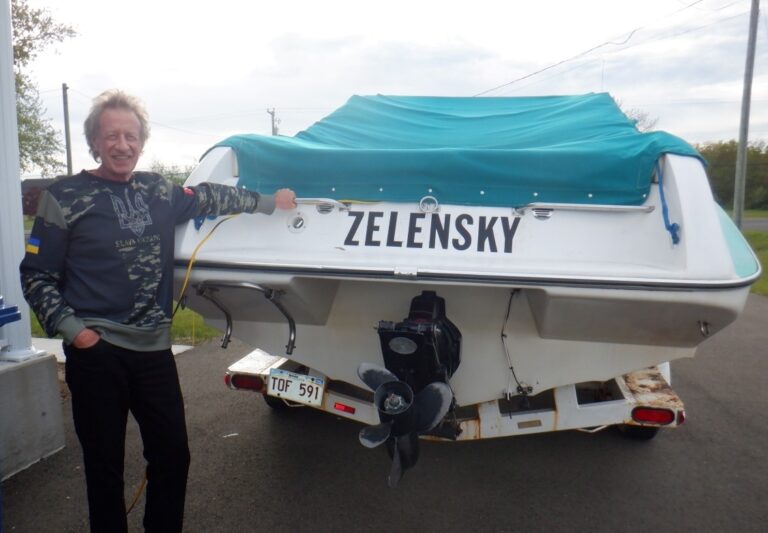
Superstition says that you shouldn’t change a boat’s name unless you go through a rigorous renaming process to appease Poseidon, the god of the sea. Otherwise, bad luck is bound to follow. Like most important things regarding this fibreglass money pit, I discovered this only later, when Poseidon was already pissed at me for changing the boat’s name from Paradise Ain’t Cheap to Zelensky in honour of Ukraine’s resolute President.
Not to say we didn’t have bad luck with the boat before the name change, but Poseidon certainly ensured that its problems would accelerate afterward.
For instance, I can’t remember exactly how many propellers I damaged, but I believe it was more than two. One was when I hit a sandbar in what I thought was the middle of the ocean; the other was when I caught some rocks at the Newcastle dock in the nearby Miramichi River. Both resulted from a dislodged depth-finding transponder, the latter excursion including friends on board who were visiting from Alberta.
Another time, we had friends visiting from the US on board, hundreds of metres offshore. Poseidon’s revenge once again kicked in, with the boat not starting after we’d allowed it to drift for a bit while soaking up the sun.
And I’m just scratching the surface. I could never depend on it to start or continue running once it did start. It would also often stall when I was doing forward/reverse while docking it, which resulted in more than a few scratches.
Enough is enough
By the end of the third year, I’d had enough. The boat was costing too much to own, and it wasn’t getting enough use anyway, either because it was in the shop or because it required two people to launch. So, I decided to sell in the spring of 2024.
Unsurprisingly, spring is the best time to sell a boat because everyone who got a ride on a friend’s boat last year now wants one, too. It sold relatively quickly, but not before I had spent yet more money to make it sellable. I’ve never added up all the costs I (we) incurred in the three years of owning this albatross because I’d vomit if I did.
As they say, the two best days for yourself as a boat owner are the day you buy and the day you sell. True that.
Letting go of more than just a boat
However, it was still difficult to watch the new owner pull that vessel out of our yard for the final time. Of course, there was relief that the stress and cost of boat ownership were no more. But, at the same time, my dream of being a boater was done, too, as it would be too financially onerous to buy another.
By letting Zelensky go, I was letting go part of who I was and who I wanted to be in retirement. It felt more like a rending than a simple material transition – if I wasn’t a boater, who exactly would I be instead?
Eventually, I moved on to discover that I could pursue one of my other passions in retirement, namely writing. Moreover, I could slowly but surely see myself being a writer.
Now that I write full-time, I’m always thinking about how to weave my life experiences into interesting, new stories, perhaps even stories about boating.
But only ones that don’t involve bent propellers, dislodged depth transponders, or very expensive recreational pump toilets.
On dying & grief series
The Call of Home series
More memoir
The second generation: Life as a child of Ukrainian immigrants
Growing up working class, I wanted to be something else
Our house is not a “Very, very fine house”
Competition: Its unexpected value at every stage of life
Sacred space: This is where you connect with something bigger
Major Work: We were “Sputnik’s Children” – until “streaming” became a bad word
Fishing for the ‘Big One’? Forget it – any size catch will do
What you lose when you ignore ceremony and ritual
The value of reconnecting in our “last quarter”
Divorce 25 years on: Our daughter is still reaping the benefits
Letters: The wondrous time capsule I found on my bookcase
Navigating Friendship in My “Last Quarter”
The “Mongoose System” recipe for life: Take chances, make mistakes, and have fun
The truth about regret: You are what the results say you are
Cultural cross-currents: What I now know in moving to Canada’s only bilingual province
Happy ending? My family dysfunction would make For better TV
One uncomfortable truth my 18-year-old self needed to hear
Settling for less: How many of us end up doing what we truly love?
Generosity of spirit: The key ingredient to a successful marriage
November 1980: The day I struck a blow for Canada
Turning sixty-five has been a kick in the teeth in a way I never would have expected
Pachelbel, the CBC, and the liberal arts: A surprising connection